Dallas Art Fair 2025
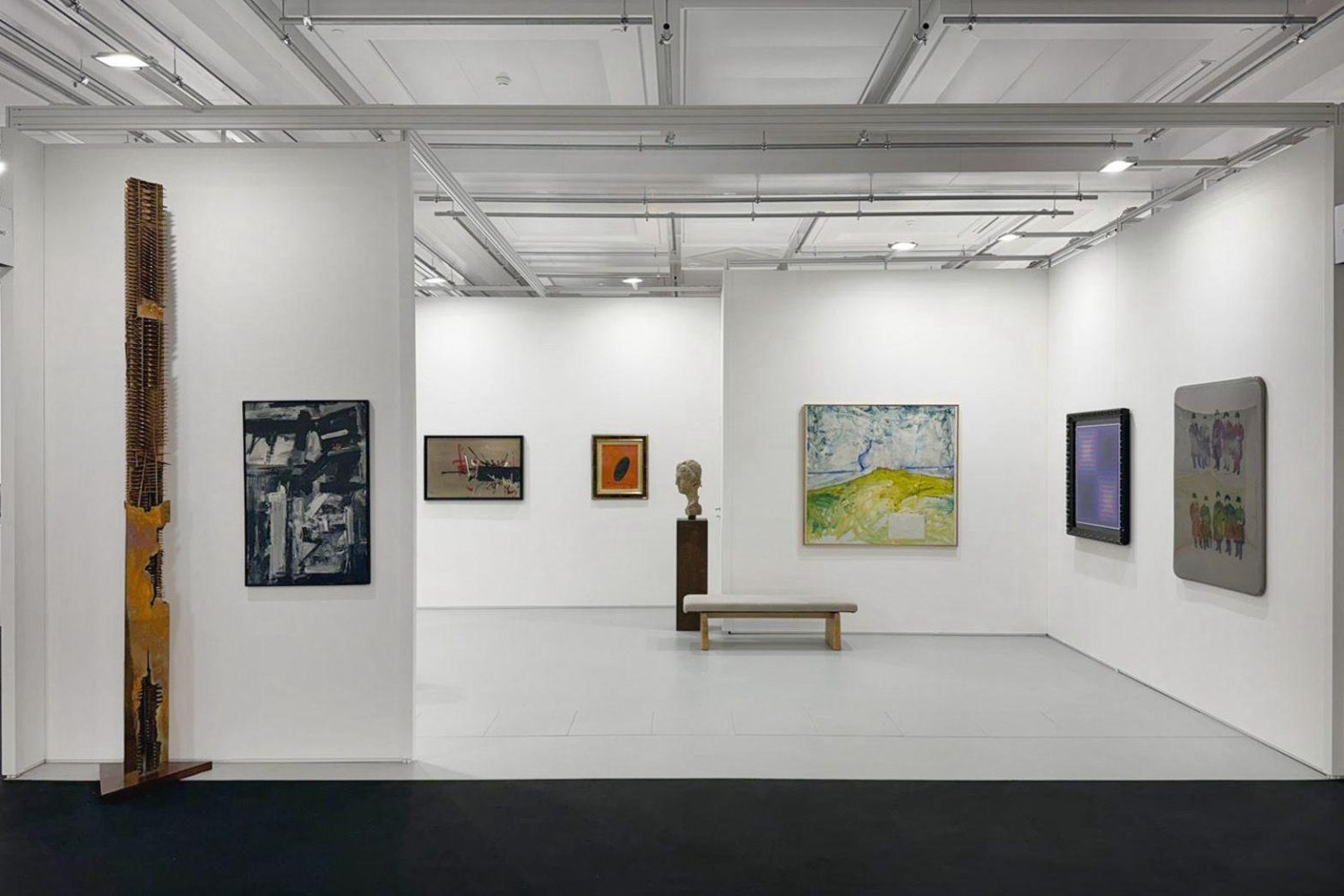
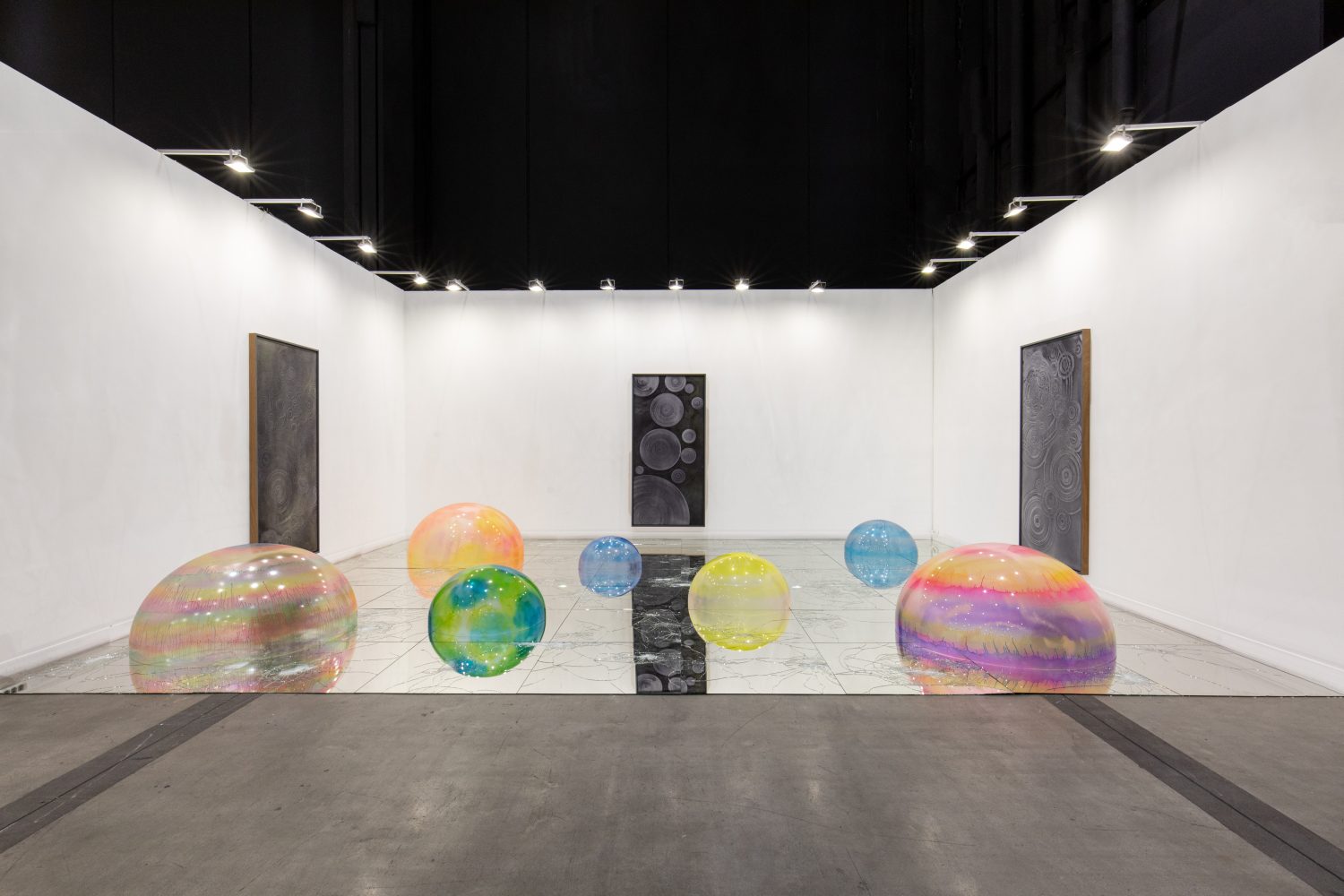
La Galleria esporrà alla Dallas Art Fair dal 10 al 13 aprile 2025, dove presenterà una selezione curata di opere di artisti emergenti e affermati come Patrick Alston, Alin Bozbiciu, Daria Dmytrenko, Etsu Egami, Dan Flanagan, Kevin Francis Gray, Abul Hisham, Jordy Kerwick, Jeremy Lawson, Jason Martin, Alfredo Pirri, Chico Da Silva, Giuseppe Stampone, Yves Scherer, Levi van Veluw e Didier William.
La Galleria si troverà allo stand #F28.
La Galleria esporrà alla Dallas Art Fair dal 10 al 13 aprile 2025, dove presenterà una selezione curata di opere di artisti emergenti e affermati come Patrick Alston, Alin Bozbiciu, Daria Dmytrenko, Etsu Egami, Dan Flanagan, Kevin Francis Gray, Abul Hisham, Jordy Kerwick, Jeremy Lawson, Jason Martin, Alfredo Pirri, Chico Da Silva, Giuseppe Stampone, Yves Scherer, Levi van Veluw e Didier William.
La Galleria si troverà allo stand #F28.
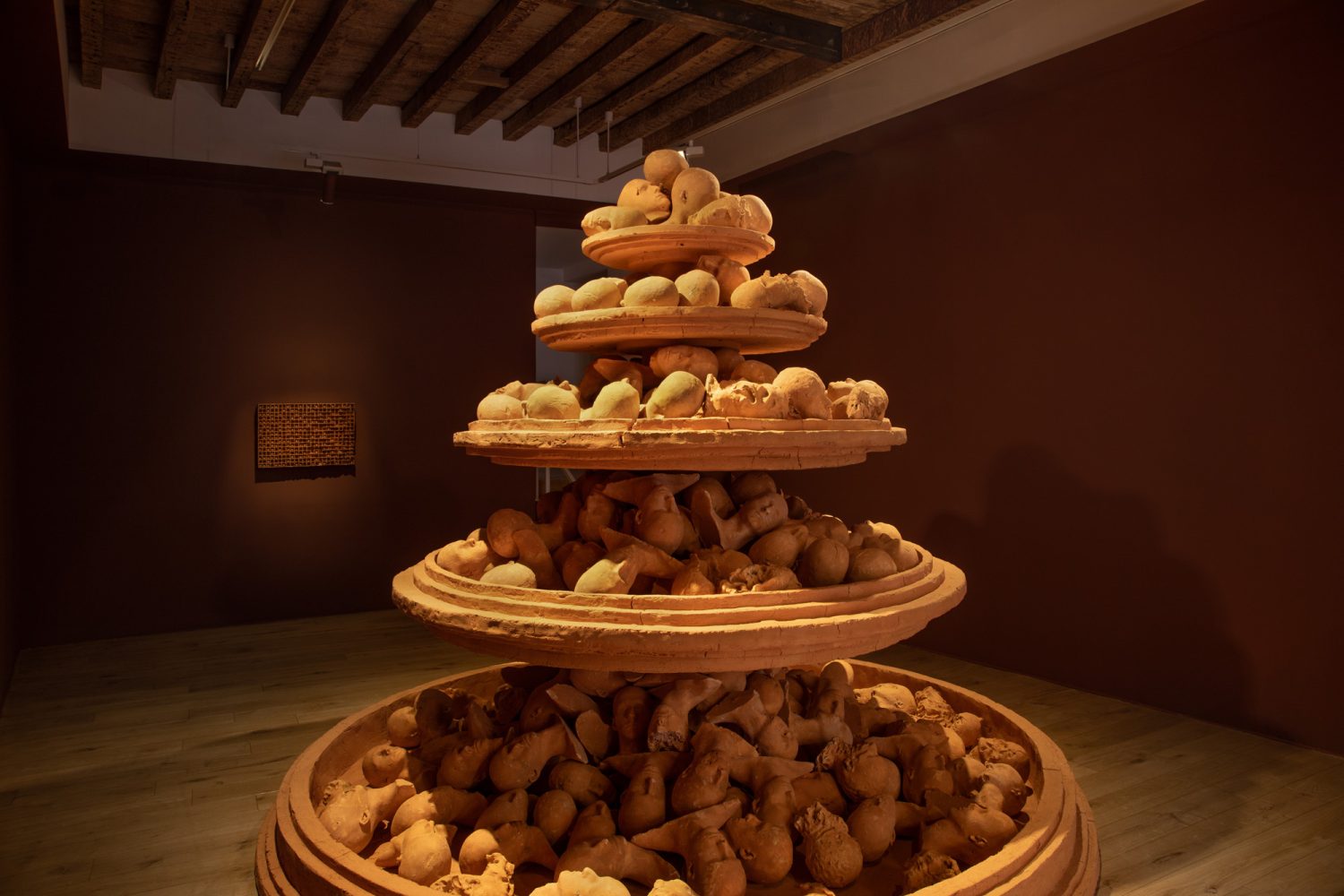
Levi van Veluw, nato nel 1985 a Hoevelaken (Paesi Bassi), vive e lavora ad Amsterdam. Dopo gli studi all’ArtEZ University of the Arts ad Arnhem (2007) concepisce lavori multidisciplinari, che includono installazioni scenografiche, fotografie, video, sculture e disegni. Van Veluw basa la sua pratica sull’idea di una realtà alternativa, creando un laboratorio visivo in cui sono presenti sia l’ordine che il caos. L’artista indaga la relatività della materia e attinge a teorie scientifiche e fisiche per affrontare dilemmi esistenziali. Le sue installazioni misteriose e sensoriali incoraggiano l’osservatore a riflettere sullo sviluppo di una nuova conoscenza, derivante dal desiderio di un universo regolato, pur riconoscendo l’impossibilità razionale del controllo totale.
Tra le sue mostre personali più recenti ricordiamo: Videocittà, Roma (2021); Eduardo Secci, Firenze (2020); Rijksmuseum Twenthe, Enschede, Paesi Bassi (2020); Praz-Delavallade, Parigi (2020); Het HEM, Zaandam, Paesi Bassi (2020); Tenuta Dello Scompiglio, Lucca (2019); Domaine de Kerguéhennec, Bignan, Francia (2018); La Galerie Particulière, Parigi (2017); Galerie Ron Mandos, Amsterdam (2019); Rosenfeld Porcini Gallery, Londra (2016). Tra le numerose mostre collettive: Museum Kranenburgh, Bergen, Paesi Bassi (2017); labellisée Normandie Impressonniste 2016, Jumièges, Francia; Museum de Fundatie, Zwolle, Paesi Bassi (2016); Maddox Arts, Londra (2015).
Van Veluw ha inoltre preso parte a importanti fiere internazionali come Zona Maco (2018); The Armory Show, New York (2017); Art Brussels (2016); Chicago Art Fair (2016); Volta Basel (2012) e the Barcelona Loop Fair Barcelona (2014).
Le sue opere sono presenti in collezioni pubbliche e private, come BoLe sue opere sono presenti in collezioni pubbliche e private, come Borusan Contemporary Collection, Caldic Collection, Ekard Collection e KPMG Art Collection.
Levi van Veluw, nato nel 1985 a Hoevelaken (Paesi Bassi), vive e lavora ad Amsterdam. Dopo gli studi all’ArtEZ University of the Arts ad Arnhem (2007) concepisce lavori multidisciplinari, che includono installazioni scenografiche, fotografie, video, sculture e disegni. Van Veluw basa la sua pratica sull’idea di una realtà alternativa, creando un laboratorio visivo in cui sono presenti sia l’ordine che il caos. L’artista indaga la relatività della materia e attinge a teorie scientifiche e fisiche per affrontare dilemmi esistenziali. Le sue installazioni misteriose e sensoriali incoraggiano l’osservatore a riflettere sullo sviluppo di una nuova conoscenza, derivante dal desiderio di un universo regolato, pur riconoscendo l’impossibilità razionale del controllo totale.
Tra le sue mostre personali più recenti ricordiamo: Videocittà, Roma (2021); Eduardo Secci, Firenze (2020); Rijksmuseum Twenthe, Enschede, Paesi Bassi (2020); Praz-Delavallade, Parigi (2020); Het HEM, Zaandam, Paesi Bassi (2020); Tenuta Dello Scompiglio, Lucca (2019); Domaine de Kerguéhennec, Bignan, Francia (2018); La Galerie Particulière, Parigi (2017); Galerie Ron Mandos, Amsterdam (2019); Rosenfeld Porcini Gallery, Londra (2016). Tra le numerose mostre collettive: Museum Kranenburgh, Bergen, Paesi Bassi (2017); labellisée Normandie Impressonniste 2016, Jumièges, Francia; Museum de Fundatie, Zwolle, Paesi Bassi (2016); Maddox Arts, Londra (2015).
Van Veluw ha inoltre preso parte a importanti fiere internazionali come Zona Maco (2018); The Armory Show, New York (2017); Art Brussels (2016); Chicago Art Fair (2016); Volta Basel (2012) e the Barcelona Loop Fair Barcelona (2014).
Le sue opere sono presenti in collezioni pubbliche e private, come BoLe sue opere sono presenti in collezioni pubbliche e private, come Borusan Contemporary Collection, Caldic Collection, Ekard Collection e KPMG Art Collection.
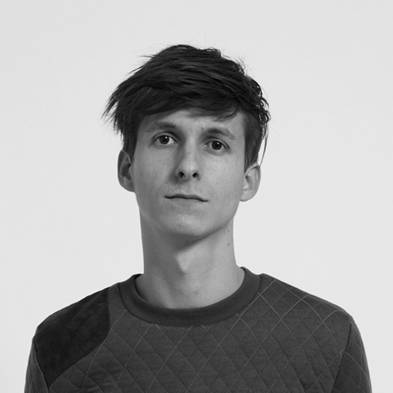
Abul Hisham (Born 1987 in Thrissur, Kerala), translates impulses culled from the Safavid, Mughal, Rajput and Deccani repertoires into an expressionist vocabulary, developing a sequence of portraits and tableaux that are uncanny, riddling, and phantasmagorical.
His scenes speak frequently of his native India, but often the inhabitants are from elsewhere. The exploration of shared histories, and of hierarchy and power, have been tarting points for his work. Concerns that show up in Abul’s work are religious conflicts and caste systems, which he considers the two most compelling issues today.
Abul’s interest in the existential finds expression in the medium of dry pastel, which he has been using over the last decade. The experience of working with the powdered pigment is like sculpting from dust, and recalls the Christian and Islamic belief that humans were created from dust to which they return after death. Some of the pastel pigments that Hisham uses are made from mined minerals, themselves part of the cycle of creation and transformation over millennia.
“My body of work explores the notions of desire, death and memory. These three points each have their own multi-layered profundity, and I’m interested in how they are intertwined with the social and cultural spaces in which I live – although I’m also concerned about the role of an artist as an observer in these spaces. The motivation for me is always evolving, from curiosities about socio-political cultural spaces to personal narratives, with cinema, pop culture, art history, mythology, and religion as reference points. And I enjoy the process of letting viewers decipher the many metaphors and symbols for themselves.
My interest in the existential finds expression in the medium of soft pastel, which I have been using over the last decade. The experience of working with powdered pigments is like sculpting from dust, keeping with the Christian and Islamic belief that humans were created from dust, and to which they return after death. Some of the pigments I use are made from mined minerals, themselves part of the terrestrial cycle of creation and transformation over millennia. Along with my investigations in two-dimensional space, I’m also currently exploring sculptural installations that address memories of inner space, and their potential connections to the idea of the Self.” – Abul Hisham
Abul Hisham (Born 1987 in Thrissur, Kerala), translates impulses culled from the Safavid, Mughal, Rajput and Deccani repertoires into an expressionist vocabulary, developing a sequence of portraits and tableaux that are uncanny, riddling, and phantasmagorical.
His scenes speak frequently of his native India, but often the inhabitants are from elsewhere. The exploration of shared histories, and of hierarchy and power, have been tarting points for his work. Concerns that show up in Abul’s work are religious conflicts and caste systems, which he considers the two most compelling issues today.
Abul’s interest in the existential finds expression in the medium of dry pastel, which he has been using over the last decade. The experience of working with the powdered pigment is like sculpting from dust, and recalls the Christian and Islamic belief that humans were created from dust to which they return after death. Some of the pastel pigments that Hisham uses are made from mined minerals, themselves part of the cycle of creation and transformation over millennia.
“My body of work explores the notions of desire, death and memory. These three points each have their own multi-layered profundity, and I’m interested in how they are intertwined with the social and cultural spaces in which I live – although I’m also concerned about the role of an artist as an observer in these spaces. The motivation for me is always evolving, from curiosities about socio-political cultural spaces to personal narratives, with cinema, pop culture, art history, mythology, and religion as reference points. And I enjoy the process of letting viewers decipher the many metaphors and symbols for themselves.
My interest in the existential finds expression in the medium of soft pastel, which I have been using over the last decade. The experience of working with powdered pigments is like sculpting from dust, keeping with the Christian and Islamic belief that humans were created from dust, and to which they return after death. Some of the pigments I use are made from mined minerals, themselves part of the terrestrial cycle of creation and transformation over millennia. Along with my investigations in two-dimensional space, I’m also currently exploring sculptural installations that address memories of inner space, and their potential connections to the idea of the Self.” – Abul Hisham

Daria Dmytrenko (1993, Dnipropetrovsk, Ukraine) lives and works in Venice. After receiving her initial artistic training in Dnipropetrovsk, she studied painting at the National Academy of Visual Arts and Architecture in Kyiv (2012-15) and graduated from the Academy of Fine Arts in Venice in 2021. Through her painting, the artist explores the visual expression of the subconscious, using intuitive impulses as a tool to bring forth deep memories and transform them into composition. Her works have been exhibited in several shows, including Journey to the Center of the Mind, Stems (Paris, 2024), What’s Behind the Gloom, Setareh (Düsseldorf, 2023), Degree Show II, Palazzo Monti (Brescia, 2021); Extraordinario, Vulcano agenzia VEGA (Venice, 2020); 103rd Collettiva Giovani Artisti, Fondazione Bevilacqua La Masa, Galleria Piazza San Marco (Venice, 2020); Spin Off, Calle Lunga Santa Caterina (Venice, 2019); Speculum Mundi, Davide Gallo (Milan, 2018); Upon a Time, Galleria Eduardo Secci (Florence, 2022); Fluuuuuido, Cassina Projects (Milan, 2022)
Daria Dmytrenko (1993, Dnipropetrovsk, Ukraine) lives and works in Venice. After receiving her initial artistic training in Dnipropetrovsk, she studied painting at the National Academy of Visual Arts and Architecture in Kyiv (2012-15) and graduated from the Academy of Fine Arts in Venice in 2021. Through her painting, the artist explores the visual expression of the subconscious, using intuitive impulses as a tool to bring forth deep memories and transform them into composition. Her works have been exhibited in several shows, including Journey to the Center of the Mind, Stems (Paris, 2024), What’s Behind the Gloom, Setareh (Düsseldorf, 2023), Degree Show II, Palazzo Monti (Brescia, 2021); Extraordinario, Vulcano agenzia VEGA (Venice, 2020); 103rd Collettiva Giovani Artisti, Fondazione Bevilacqua La Masa, Galleria Piazza San Marco (Venice, 2020); Spin Off, Calle Lunga Santa Caterina (Venice, 2019); Speculum Mundi, Davide Gallo (Milan, 2018); Upon a Time, Galleria Eduardo Secci (Florence, 2022); Fluuuuuido, Cassina Projects (Milan, 2022)

Etsu Egami (1994, Tokyo, Giappone), è rappresentante della terza generazione di artisti contemporanei giapponesi post-bellici, attivamente coinvolta in Giappone, Cina, Stati Uniti ed Europa. Ha studiato presso l’Università delle Arti e del Design di Karlsruhe (HFG) in Germania e presso l’Accademia Centrale di Belle Arti di Pechino.
Ha ottenuto il premio per il miglior artista nel 2023, Forbes Asia 30 UNDER 30 nel 2021, e attualmente è a New York, inviata come artista talentuosa dall’Agenzia per gli Affari Culturali del Governo Giapponese. Etsu Egami attualmente vive e lavora tra Tokyo e New York. Mostre personali selezionate includono “Etsu Egami solo show”, Whitestone gallery Singapore (Singapore, 2023); “Etsu Egami: Obsession and Question, New Horizons of Modern Painting”, Hiroshima Woodone Museum (Giappone, 2022); “Rainbow”, Tang Contemporary Art, Seoul (Corea, 2022); A2Z PARIS (Parigi, 2022); “Etsu Egami: Rainbow”, Karuizawa New Museum (Giappone, 2022); “Etsu Egami: In a Moment of Misunderstanding, All the Masks Fall”, Tang Contemporary Art, Pechino (Cina, 2021); “RAINBOW- ETSU EGAMI”, Whitestone gallery Taipei, Taipei (Cina, 2021); “Face book- EGAMI ETSU”, Chambers Fine Art, New York (USA, 2021).
Etsu Egami (1994, Tokyo, Giappone), è rappresentante della terza generazione di artisti contemporanei giapponesi post-bellici, attivamente coinvolta in Giappone, Cina, Stati Uniti ed Europa. Ha studiato presso l’Università delle Arti e del Design di Karlsruhe (HFG) in Germania e presso l’Accademia Centrale di Belle Arti di Pechino.
Ha ottenuto il premio per il miglior artista nel 2023, Forbes Asia 30 UNDER 30 nel 2021, e attualmente è a New York, inviata come artista talentuosa dall’Agenzia per gli Affari Culturali del Governo Giapponese. Etsu Egami attualmente vive e lavora tra Tokyo e New York. Mostre personali selezionate includono “Etsu Egami solo show”, Whitestone gallery Singapore (Singapore, 2023); “Etsu Egami: Obsession and Question, New Horizons of Modern Painting”, Hiroshima Woodone Museum (Giappone, 2022); “Rainbow”, Tang Contemporary Art, Seoul (Corea, 2022); A2Z PARIS (Parigi, 2022); “Etsu Egami: Rainbow”, Karuizawa New Museum (Giappone, 2022); “Etsu Egami: In a Moment of Misunderstanding, All the Masks Fall”, Tang Contemporary Art, Pechino (Cina, 2021); “RAINBOW- ETSU EGAMI”, Whitestone gallery Taipei, Taipei (Cina, 2021); “Face book- EGAMI ETSU”, Chambers Fine Art, New York (USA, 2021).

Alin Bozbiciu is a young, talented artist representing the figurative painting of the School of Cluj in Rumania. He excels in the medium of painting in all its facets. A soft wide brush stroke and abundant use of paint are characteristic for his style. The palette roams on the spectrum of earth colors and grisaille hues with very rare color outbursts.
The artist is passionate about subjects of his own private surrounding and the representation of familiar or even related individuals. Animals, especially dogs, star in many of his paintings. The subjects are set in private, intimate poses usually alone and seemingly unobserved. Often their gaze is turned to the floor, their bodies crouched or bent which conveys a feeling of the portrayed people being abandoned or immersed in private thoughts. The dogs reinforce the intimacy of the moment and create an emotional link between the person in the picture and the viewer. After further contemplation, one sometimes spots details in the pictures that do imply the presence of others.
Bozbiciu is dedicated to his subjects in constant repetition, serial work is a main method of his oeuvre. It allows him to study his subjects in different formats and variations, eliminating the clichés of content and representation. This method forces the viewer to look closer in order to distinguish the motives. This way Bozbiciu questions and challenges our perception of images. Despite his painting being figurative it is also extremely aloof only hinting at things instead of being explicit. Much is left ambiguous and open for interpretation or associations of the viewer. His big brush strokes are a tool to convey emotions and sensuality not enunciate content. Hence his work demands to be looked at again and again in order to be seen. They reveal their chore qualities when met with devotion.
Alin Bozbiciu is a young, talented artist representing the figurative painting of the School of Cluj in Rumania. He excels in the medium of painting in all its facets. A soft wide brush stroke and abundant use of paint are characteristic for his style. The palette roams on the spectrum of earth colors and grisaille hues with very rare color outbursts.
The artist is passionate about subjects of his own private surrounding and the representation of familiar or even related individuals. Animals, especially dogs, star in many of his paintings. The subjects are set in private, intimate poses usually alone and seemingly unobserved. Often their gaze is turned to the floor, their bodies crouched or bent which conveys a feeling of the portrayed people being abandoned or immersed in private thoughts. The dogs reinforce the intimacy of the moment and create an emotional link between the person in the picture and the viewer. After further contemplation, one sometimes spots details in the pictures that do imply the presence of others.
Bozbiciu is dedicated to his subjects in constant repetition, serial work is a main method of his oeuvre. It allows him to study his subjects in different formats and variations, eliminating the clichés of content and representation. This method forces the viewer to look closer in order to distinguish the motives. This way Bozbiciu questions and challenges our perception of images. Despite his painting being figurative it is also extremely aloof only hinting at things instead of being explicit. Much is left ambiguous and open for interpretation or associations of the viewer. His big brush strokes are a tool to convey emotions and sensuality not enunciate content. Hence his work demands to be looked at again and again in order to be seen. They reveal their chore qualities when met with devotion.

Kevin Francis Gray, nato nel 1972 in Irlanda del Nord, vive e lavora tra Londra e l’Italia.
Kevin Francis Gray ha generato un corpo di lavoro che affronta la complessa relazione tra astrazione e figurazione. La sua ricerca artistica si basa sull’intersezione tra tecniche di scultura tradizionale e vita contemporanea. Anziché lavorare verso ideali di bellezza o di memoria, Gray si focalizza sugli effetti psicologici dei suoi soggetti, spesso sfruttando superfici materiche per esprimere stati mentali, posture facciali o corporee. Dopo dieci anni dedicati alla lavorazione del marmo, i nuovi lavori di Gray cercano di spingere la pratica scultorea dell’artista verso nuovi territori di espressione fisica e psicologica.
Si è laureato presso il National College of Art & Design di Dublino (1995) e presso la School of Art Institute di Chicago (1996), per poi proseguire con un Master in Belle Arti presso il Goldsmiths College di Londra. Lavora a stretto contatto con lo studio di marmo Giannoni, a Pietrasanta, noto per l’impiego di tecniche scultorie risalenti a Canova e Michelangelo. Le sue opere hanno fatto parte di mostre presso la Royal Academy, Londra, UK; il Sudeley Castle, Winchcombe, Gloucestershire, UK; il Museum of Contemporary Art della Val de- Marne, Parigi, Francia; il Nieuw Dakota, Amsterdam; il Palazzo Arti Napoli, Napoli, Italia; il Musee d’Art Moderne, Saint-Etienne, Francia; l’ARTIUM, Centro-Museo Vasco de Arte Contemporáneo, Vitoria-Gasteiz, Spagna; il Tel-Aviv Museum of Art, Tel Aviv, Israele; e l’Art Space, New York, USA.
Kevin Francis Gray, nato nel 1972 in Irlanda del Nord, vive e lavora tra Londra e l’Italia.
Kevin Francis Gray ha generato un corpo di lavoro che affronta la complessa relazione tra astrazione e figurazione. La sua ricerca artistica si basa sull’intersezione tra tecniche di scultura tradizionale e vita contemporanea. Anziché lavorare verso ideali di bellezza o di memoria, Gray si focalizza sugli effetti psicologici dei suoi soggetti, spesso sfruttando superfici materiche per esprimere stati mentali, posture facciali o corporee. Dopo dieci anni dedicati alla lavorazione del marmo, i nuovi lavori di Gray cercano di spingere la pratica scultorea dell’artista verso nuovi territori di espressione fisica e psicologica.
Si è laureato presso il National College of Art & Design di Dublino (1995) e presso la School of Art Institute di Chicago (1996), per poi proseguire con un Master in Belle Arti presso il Goldsmiths College di Londra. Lavora a stretto contatto con lo studio di marmo Giannoni, a Pietrasanta, noto per l’impiego di tecniche scultorie risalenti a Canova e Michelangelo. Le sue opere hanno fatto parte di mostre presso la Royal Academy, Londra, UK; il Sudeley Castle, Winchcombe, Gloucestershire, UK; il Museum of Contemporary Art della Val de- Marne, Parigi, Francia; il Nieuw Dakota, Amsterdam; il Palazzo Arti Napoli, Napoli, Italia; il Musee d’Art Moderne, Saint-Etienne, Francia; l’ARTIUM, Centro-Museo Vasco de Arte Contemporáneo, Vitoria-Gasteiz, Spagna; il Tel-Aviv Museum of Art, Tel Aviv, Israele; e l’Art Space, New York, USA.

- Alfredo Pirri

- Levi van Veluw

- Omar Mismar

- Kevin Francis Gray