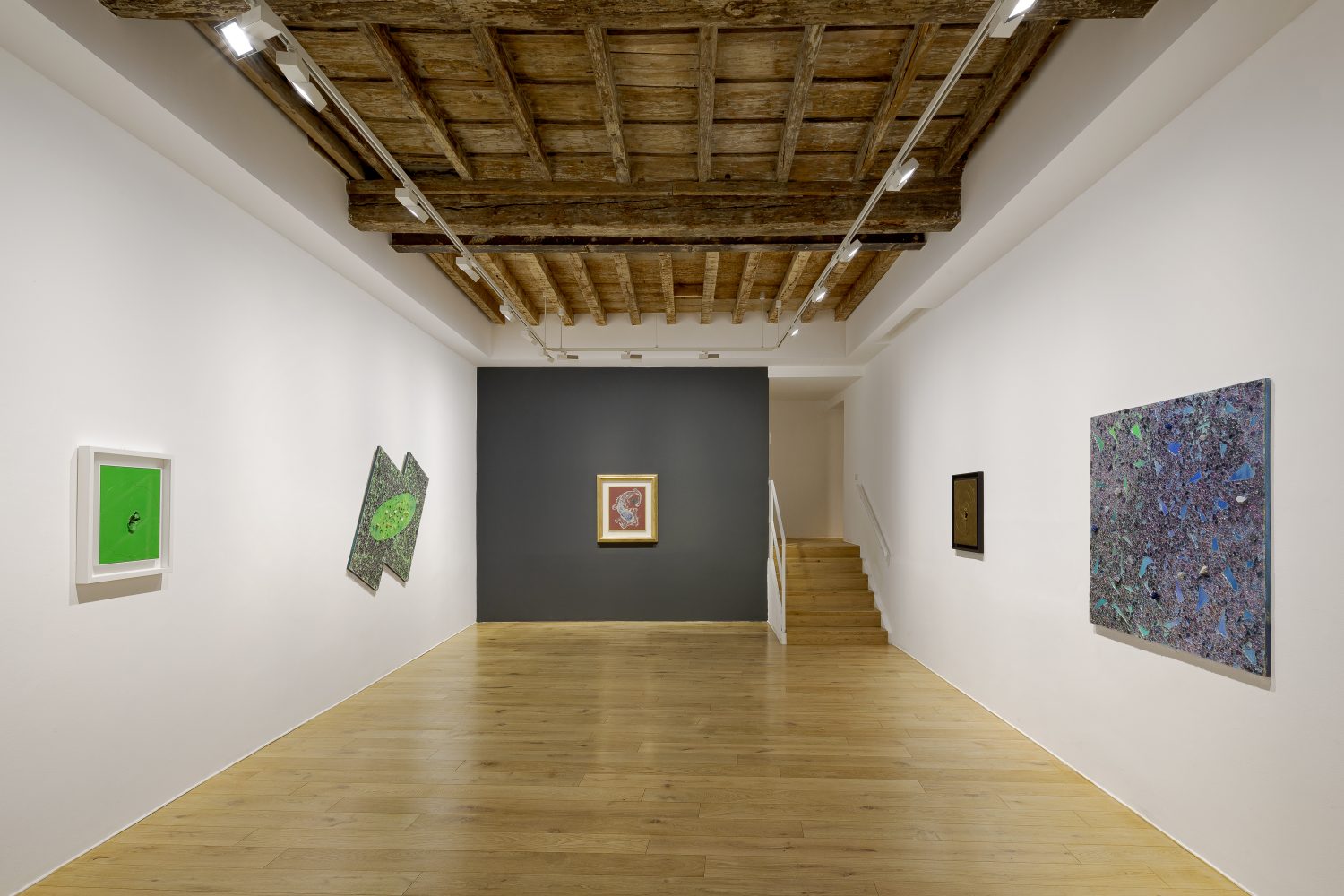
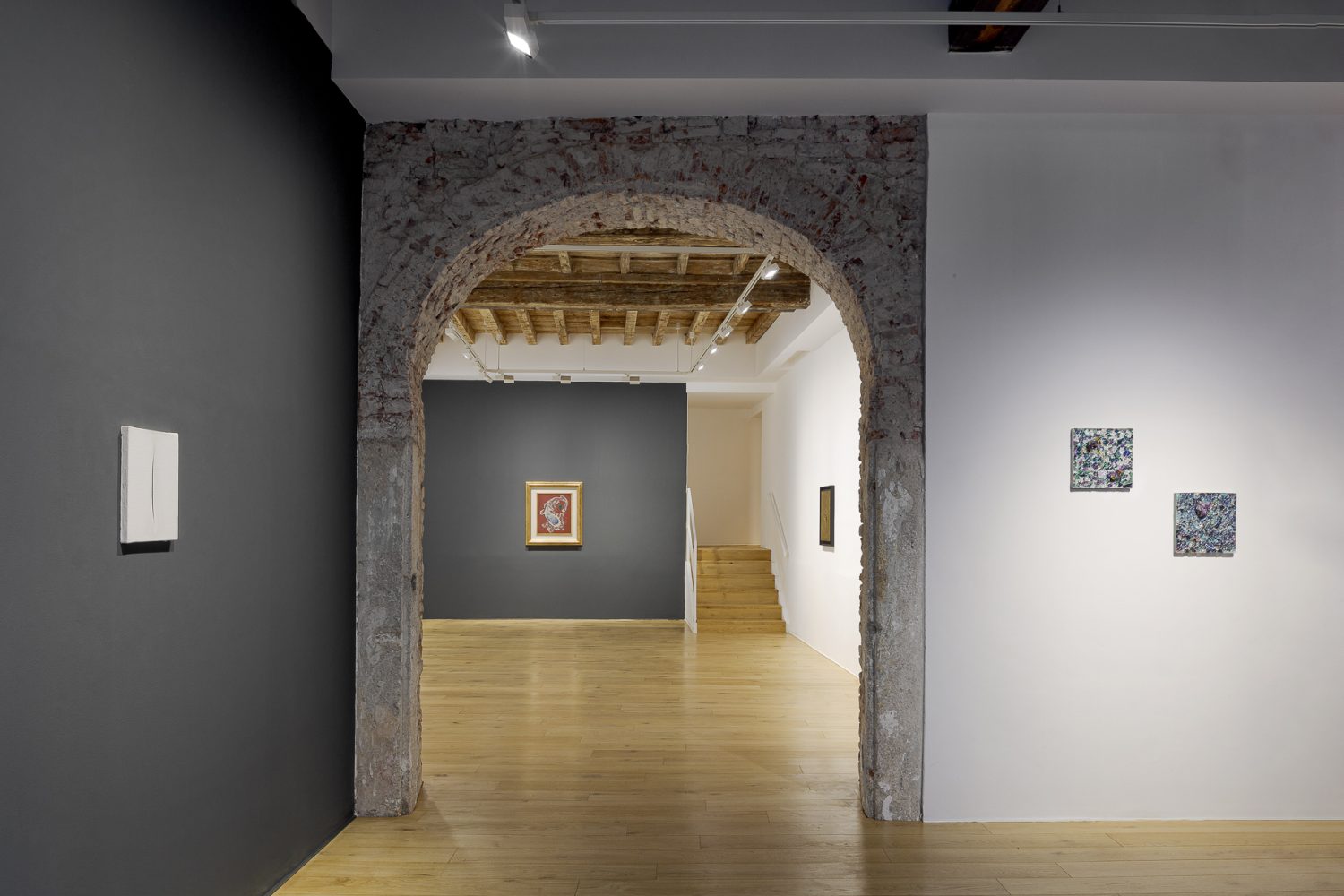
- Claudio Cintoli
Claudio Cintoli
Lanfranchi Collection, curated by Daniela Ferraria
“Entering blind alleys, bursting out, climbing over hedges, overcoming obstacles, enduring violence and injustice, swallowing bitter pills, accumulating frustrations, dragging dead weights—all for a fixed obsession: to become oneself at any cost.” This is how the artist describes his work.
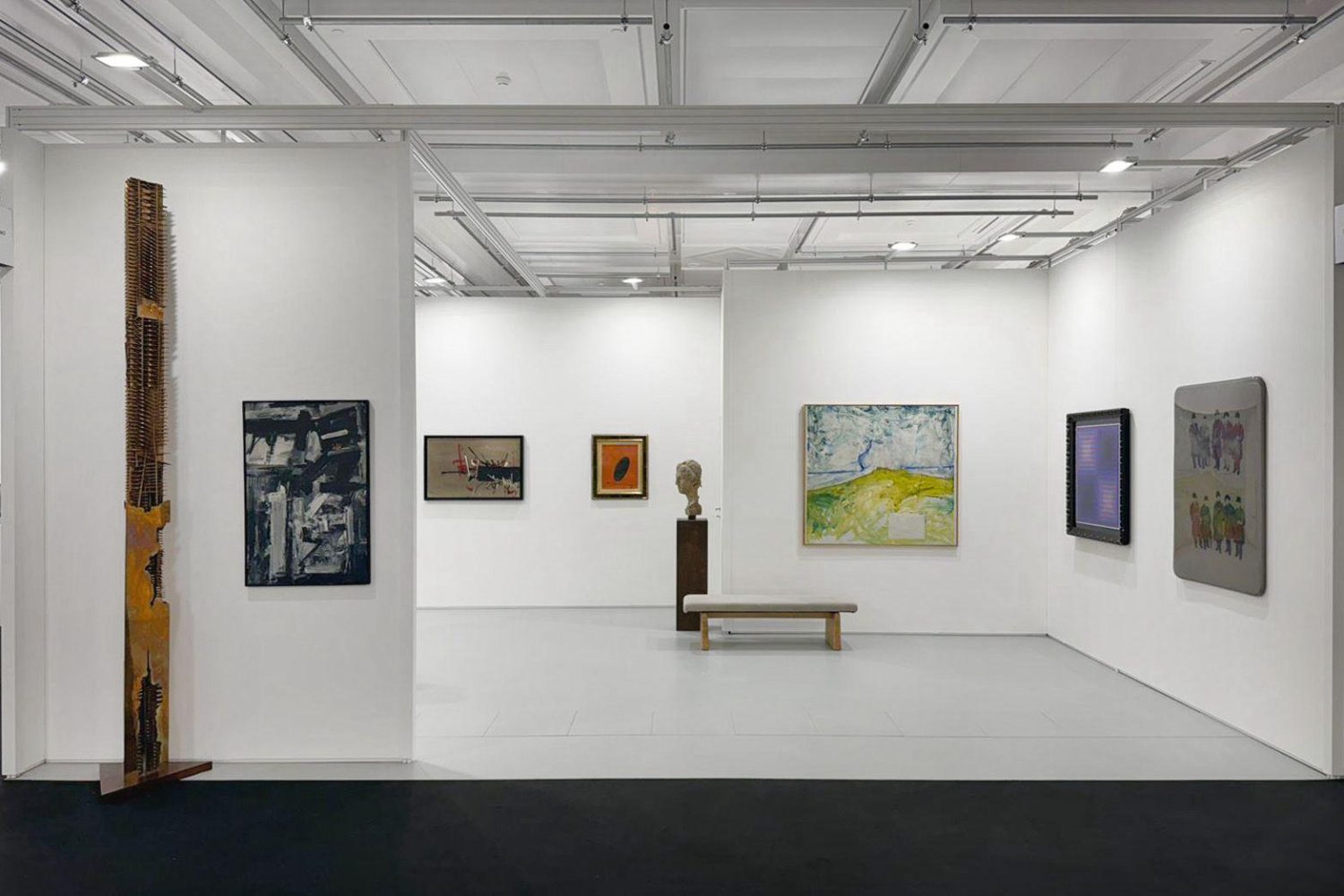
The exhibition presents the work of Claudio Cintoli starting from the 1960s and 1970s, a period in which the artist expressed himself through multiple languages and a wide stylistic range, experimenting with different materials and disciplines: painting, sculpture, photography, and video, in which he takes on the role of a performer. He possesses a versatile talent and rejects all forms of conformity.
In his early trajectory, he fully inhabits his time, embodying it with great vital energy.
In his early production, a Dadaist influence is clearly evident, traceable both in the layering of different materials such as wood, burlap, and boxes, and in the presence of photographic fragments and typographic elements.
In painting, where Cintoli finds his fullest expression, multiple subjects coexist within the same composition, and the juxtaposition of overlapping images recalls his paper collages. The artist himself defines these works as “pictorial collages.”
The application of color is achieved through a particular technique that emphasizes—almost to the point of exaggeration—the retinal fragmentation of the image, akin to a photographic process. The pictorial texture is obtained through screen patterns that produce a result similar to American Pop Art. Cintoli spent a long time in New York and absorbed that atmosphere, though his sensibility remains quite distinct.
In these works we find surrealist juxtapositions, especially in the “gardens” series, where female bodies appear within natural settings—woodlands and seascapes. There is an element of surprise in the emergence of a female anatomical detail within the landscape: a foot, an eye, a mouth. This is what he calls a “disturbing image.”
Cintoli masters all technical means and is almost obsessive in his precision and execution. He moves seamlessly from painting to filmmaking, intertwining the two languages in a reciprocal exchange of elements, creating a kind of osmosis.
In composing his paintings, he adopts the gaze of a cinematographer, as if searching for a frame, fixing the subject in artificial light. One senses a moment of suspension, as though hearing the click of the shutter. This is confirmed in his numerous diary writings, where Cintoli describes his process in terms of shots and sequences of different camera angles.
A similar approach can be found in his experimental videos, where compositional choices echo those of his collages and paintings. The artist superimposes multiple visual fields, animating them with layered narratives. Decontextualized images, reassembled with new meanings, are accompanied by wordplay, of which Cintoli is an tireless inventor.
Examining the close relationship between painting and cinema, we see in Arbitro that the subject is viewed from above, as if from an aerial perspective: the figure is flattened against the pictorial background, creating perceptual ambiguity.
Cintoli also surprises us with his choice of titles, which are never explanatory. Instead, he seeks visual suggestions that can combine in a verbal play grounded in a taste for the absurd.
Thus his titles emerge: Voice of the Grass, The Garden in the Mouth, Eye of the Sea.
During his American period, the artist undoubtedly admired the works of Magritte, absorbing their surrealist spirit in the use of both images and words.
Similarly, in his sculptures, he uses words not as references to objects but to express concepts: Chiodo fisso (Fixed Obsession) and Peso morto (Dead Weight).
In other cases, he merges words: Orchiriccio, Barbarancio.
At the end of the 1960s, after returning to Rome from his long stay in New York, Cintoli abandoned painting and turned to action-based works. His inner tension intensified and became more introspective.
In 1969, he performed three actions at the L’Attico gallery in Rome: in Annodare, he intertwines and knots ropes across the entire floor; in Chiodo fisso, he wraps himself in bandages to form a cocoon, the core of a sculpture topped by a vertical iron spike; in Colare colore, he lets black and blue paint drip along the walls of the exhibition space.
A few years later, in 1972, he created Crisalide at the International Art Meetings in Rome. This important performance remained vividly in the memory of those who witnessed it. Cintoli is enclosed in a sack in a fetal position, struggling to tear it open from within. Gradually, he emerges: first a hand, then an arm, finally his whole body, in a slow, extended rhythm. The sack resembles a womb, clearly evoking the theme of birth.
Graziella Lonardi, who had invited him, described the performance:
“My particular emotion was mixed with tenderness in seeing a friend I cared for making such an effort; I was worried because I thought he was suffering. It was the first time I had seen an artist engage physically with his entire body.”
All this is documented in the photographs of Pino Abbrescia, which preserve the memory of Cintoli’s work and testify to the strong bond between artist and photographer.
Cintoli is close to the Fluxus experience, and in his sculptures he uses “warm” materials, rich in memory: ropes, planks, sea pebbles—simple, essential forms that become archetypal. The inspirations behind Knots and Dead Weights stem from the maritime environment of his childhood in Recanati.
He often plays with the ambiguity between reality and fiction, using drawing with such technical mastery that it blurs the line between graphite and photographic image.
The theme of duality recurs throughout his work: light–shadow, birth–death, reality–fiction. He explores ambiguity and frequently repeats a work multiple times, never satisfied, always striving for refinement.
Accounts by Pino Abbrescia reveal a tension in Cintoli’s working method, marked by extreme rigor. For Crisalide, for instance, the action had to be repeated because he was dissatisfied with the original footage; he directed the cameraman himself from inside the sack.
In the mid-1970s, Marcanciel Stuprò was born—an alter ego created out of the artist’s need to generate a double. Cintoli introduced this figure through mail art, sending letters to artists and critics. This reveals a desire for exchange, to interrupt solitude while simultaneously affirming it, choosing mediated rather than direct communication.
With Marcanciel Stuprò, Cintoli grants his double an autonomous, unsettling, and ironic life. The figure appears in newspaper ads and posters across various cities.
In 1976, he exhibited simultaneously in two galleries in Milan under his dual identity: as Marcanciel Stuprò at Galleria Multiphla (Uovo nuovo) and as Claudio Cintoli at Galleria Lorenzelli (Un uovo è un uovo).
In the first exhibition, the work consists of seven panels combining ostrich eggs with photographs of embryos. In the second, shaped canvases are arranged along the wall in a wave-like movement, painted hyperrealistically in opalescent tones: lunar egg, olive egg, cerulean egg, rust egg… The perfect form of the egg, rich in art historical echoes, is presented here as the origin of existence.
The issue of identity and doubling becomes even more evident in the final part of his life. In his diaries appears a quote by Borges: “I saw all the mirrors on the planet and none reflected me.”
The two identities—and thus two lives—follow parallel paths, culminating in a striking coincidence: the announcement of Marcanciel Stuprò’s death in 1977 is shortly followed by Cintoli’s own death in March 1978.
That same summer, he was invited to the Venice Biennale by Enrico Crispolti, with a retrospective tribute to prematurely deceased artists alongside Domenico Gnoli and Ketty La Rocca.
Beyond painting, Cintoli worked on multiple fronts: he was an art critic and correspondent for various magazines during his stay in New York, maintaining active correspondence with Italian critics.
At the same time, he devoted himself to graphics and experimental animation. Through his first wife Gill, he met Len Lye, an American underground filmmaker who introduced him to the cinematic milieu.
In 1964, Cintoli directed the short film Più, presented at the First International Festival of Pesaro. The following year he created Mezzogiorno e mezzo, invited to the International Film Festival in Rio de Janeiro. In 1967 he directed Primavera nascosta.
The last two films were produced by Corona Cinematografica, directed by Riccardo Tortora.
During his formative years, Cintoli attended the Faculty of Architecture at the University of Rome, where he formed strong friendships with fellow students, including Manlio Capolei and Franco Pesci. These relationships led to commissions from architectural studios.
In 1964–65, for architects Capolei and Cavalli, he created a large mural (about 20 meters long) for the Piper Club in Rome: Giardino per Ursula. The mural consisted of assembled panels with different subjects in sequence, dominated by the radiant smile of a young woman.
This scenography covered the entire back wall of what was Rome’s first nightclub and became etched in the collective memory of a generation. Unfortunately, the mural has been lost, like many of Cintoli’s works.
In 1969, again through the Capolei studio, he created Manciata di Stelle, a large mural for the Vatican depicting, on a monumental scale, Michelangelo’s detail of the human hand reaching toward the divine, set against a galactic background.
Claudio Cintoli is a restless artist, in constant transformation. His versatility and shifting tendencies puzzled critics and the market in the 1970s, to which he responded with resentment that concealed a deep inner unease.
Today, with historical distance, it is easier to reinterpret his work in its natural evolution and irreducible multiplicity: although constantly changing, Cintoli is never anything other than himself.
The current exhibition outlines a specific curatorial path and features a selection of works from the Luciano Lanfranchi collection.
Lanfranchi Collection, curated by Daniela Ferraria
“Entering blind alleys, bursting out, climbing over hedges, overcoming obstacles, enduring violence and injustice, swallowing bitter pills, accumulating frustrations, dragging dead weights—all for a fixed obsession: to become oneself at any cost.” This is how the artist describes his work.
The exhibition presents the work of Claudio Cintoli starting from the 1960s and 1970s, a period in which the artist expressed himself through multiple languages and a wide stylistic range, experimenting with different materials and disciplines: painting, sculpture, photography, and video, in which he takes on the role of a performer. He possesses a versatile talent and rejects all forms of conformity.
In his early trajectory, he fully inhabits his time, embodying it with great vital energy.
In his early production, a Dadaist influence is clearly evident, traceable both in the layering of different materials such as wood, burlap, and boxes, and in the presence of photographic fragments and typographic elements.
In painting, where Cintoli finds his fullest expression, multiple subjects coexist within the same composition, and the juxtaposition of overlapping images recalls his paper collages. The artist himself defines these works as “pictorial collages.”
The application of color is achieved through a particular technique that emphasizes—almost to the point of exaggeration—the retinal fragmentation of the image, akin to a photographic process. The pictorial texture is obtained through screen patterns that produce a result similar to American Pop Art. Cintoli spent a long time in New York and absorbed that atmosphere, though his sensibility remains quite distinct.
In these works we find surrealist juxtapositions, especially in the “gardens” series, where female bodies appear within natural settings—woodlands and seascapes. There is an element of surprise in the emergence of a female anatomical detail within the landscape: a foot, an eye, a mouth. This is what he calls a “disturbing image.”
Cintoli masters all technical means and is almost obsessive in his precision and execution. He moves seamlessly from painting to filmmaking, intertwining the two languages in a reciprocal exchange of elements, creating a kind of osmosis.
In composing his paintings, he adopts the gaze of a cinematographer, as if searching for a frame, fixing the subject in artificial light. One senses a moment of suspension, as though hearing the click of the shutter. This is confirmed in his numerous diary writings, where Cintoli describes his process in terms of shots and sequences of different camera angles.
A similar approach can be found in his experimental videos, where compositional choices echo those of his collages and paintings. The artist superimposes multiple visual fields, animating them with layered narratives. Decontextualized images, reassembled with new meanings, are accompanied by wordplay, of which Cintoli is an tireless inventor.
Examining the close relationship between painting and cinema, we see in Arbitro that the subject is viewed from above, as if from an aerial perspective: the figure is flattened against the pictorial background, creating perceptual ambiguity.
Cintoli also surprises us with his choice of titles, which are never explanatory. Instead, he seeks visual suggestions that can combine in a verbal play grounded in a taste for the absurd.
Thus his titles emerge: Voice of the Grass, The Garden in the Mouth, Eye of the Sea.
During his American period, the artist undoubtedly admired the works of Magritte, absorbing their surrealist spirit in the use of both images and words.
Similarly, in his sculptures, he uses words not as references to objects but to express concepts: Chiodo fisso (Fixed Obsession) and Peso morto (Dead Weight).
In other cases, he merges words: Orchiriccio, Barbarancio.
At the end of the 1960s, after returning to Rome from his long stay in New York, Cintoli abandoned painting and turned to action-based works. His inner tension intensified and became more introspective.
In 1969, he performed three actions at the L’Attico gallery in Rome: in Annodare, he intertwines and knots ropes across the entire floor; in Chiodo fisso, he wraps himself in bandages to form a cocoon, the core of a sculpture topped by a vertical iron spike; in Colare colore, he lets black and blue paint drip along the walls of the exhibition space.
A few years later, in 1972, he created Crisalide at the International Art Meetings in Rome. This important performance remained vividly in the memory of those who witnessed it. Cintoli is enclosed in a sack in a fetal position, struggling to tear it open from within. Gradually, he emerges: first a hand, then an arm, finally his whole body, in a slow, extended rhythm. The sack resembles a womb, clearly evoking the theme of birth.
Graziella Lonardi, who had invited him, described the performance:
“My particular emotion was mixed with tenderness in seeing a friend I cared for making such an effort; I was worried because I thought he was suffering. It was the first time I had seen an artist engage physically with his entire body.”
All this is documented in the photographs of Pino Abbrescia, which preserve the memory of Cintoli’s work and testify to the strong bond between artist and photographer.
Cintoli is close to the Fluxus experience, and in his sculptures he uses “warm” materials, rich in memory: ropes, planks, sea pebbles—simple, essential forms that become archetypal. The inspirations behind Knots and Dead Weights stem from the maritime environment of his childhood in Recanati.
He often plays with the ambiguity between reality and fiction, using drawing with such technical mastery that it blurs the line between graphite and photographic image.
The theme of duality recurs throughout his work: light–shadow, birth–death, reality–fiction. He explores ambiguity and frequently repeats a work multiple times, never satisfied, always striving for refinement.
Accounts by Pino Abbrescia reveal a tension in Cintoli’s working method, marked by extreme rigor. For Crisalide, for instance, the action had to be repeated because he was dissatisfied with the original footage; he directed the cameraman himself from inside the sack.
In the mid-1970s, Marcanciel Stuprò was born—an alter ego created out of the artist’s need to generate a double. Cintoli introduced this figure through mail art, sending letters to artists and critics. This reveals a desire for exchange, to interrupt solitude while simultaneously affirming it, choosing mediated rather than direct communication.
With Marcanciel Stuprò, Cintoli grants his double an autonomous, unsettling, and ironic life. The figure appears in newspaper ads and posters across various cities.
In 1976, he exhibited simultaneously in two galleries in Milan under his dual identity: as Marcanciel Stuprò at Galleria Multiphla (Uovo nuovo) and as Claudio Cintoli at Galleria Lorenzelli (Un uovo è un uovo).
In the first exhibition, the work consists of seven panels combining ostrich eggs with photographs of embryos. In the second, shaped canvases are arranged along the wall in a wave-like movement, painted hyperrealistically in opalescent tones: lunar egg, olive egg, cerulean egg, rust egg… The perfect form of the egg, rich in art historical echoes, is presented here as the origin of existence.
The issue of identity and doubling becomes even more evident in the final part of his life. In his diaries appears a quote by Borges: “I saw all the mirrors on the planet and none reflected me.”
The two identities—and thus two lives—follow parallel paths, culminating in a striking coincidence: the announcement of Marcanciel Stuprò’s death in 1977 is shortly followed by Cintoli’s own death in March 1978.
That same summer, he was invited to the Venice Biennale by Enrico Crispolti, with a retrospective tribute to prematurely deceased artists alongside Domenico Gnoli and Ketty La Rocca.
Beyond painting, Cintoli worked on multiple fronts: he was an art critic and correspondent for various magazines during his stay in New York, maintaining active correspondence with Italian critics.
At the same time, he devoted himself to graphics and experimental animation. Through his first wife Gill, he met Len Lye, an American underground filmmaker who introduced him to the cinematic milieu.
In 1964, Cintoli directed the short film Più, presented at the First International Festival of Pesaro. The following year he created Mezzogiorno e mezzo, invited to the International Film Festival in Rio de Janeiro. In 1967 he directed Primavera nascosta.
The last two films were produced by Corona Cinematografica, directed by Riccardo Tortora.
During his formative years, Cintoli attended the Faculty of Architecture at the University of Rome, where he formed strong friendships with fellow students, including Manlio Capolei and Franco Pesci. These relationships led to commissions from architectural studios.
In 1964–65, for architects Capolei and Cavalli, he created a large mural (about 20 meters long) for the Piper Club in Rome: Giardino per Ursula. The mural consisted of assembled panels with different subjects in sequence, dominated by the radiant smile of a young woman.
This scenography covered the entire back wall of what was Rome’s first nightclub and became etched in the collective memory of a generation. Unfortunately, the mural has been lost, like many of Cintoli’s works.
In 1969, again through the Capolei studio, he created Manciata di Stelle, a large mural for the Vatican depicting, on a monumental scale, Michelangelo’s detail of the human hand reaching toward the divine, set against a galactic background.
Claudio Cintoli is a restless artist, in constant transformation. His versatility and shifting tendencies puzzled critics and the market in the 1970s, to which he responded with resentment that concealed a deep inner unease.
Today, with historical distance, it is easier to reinterpret his work in its natural evolution and irreducible multiplicity: although constantly changing, Cintoli is never anything other than himself.
The current exhibition outlines a specific curatorial path and features a selection of works from the Luciano Lanfranchi collection.
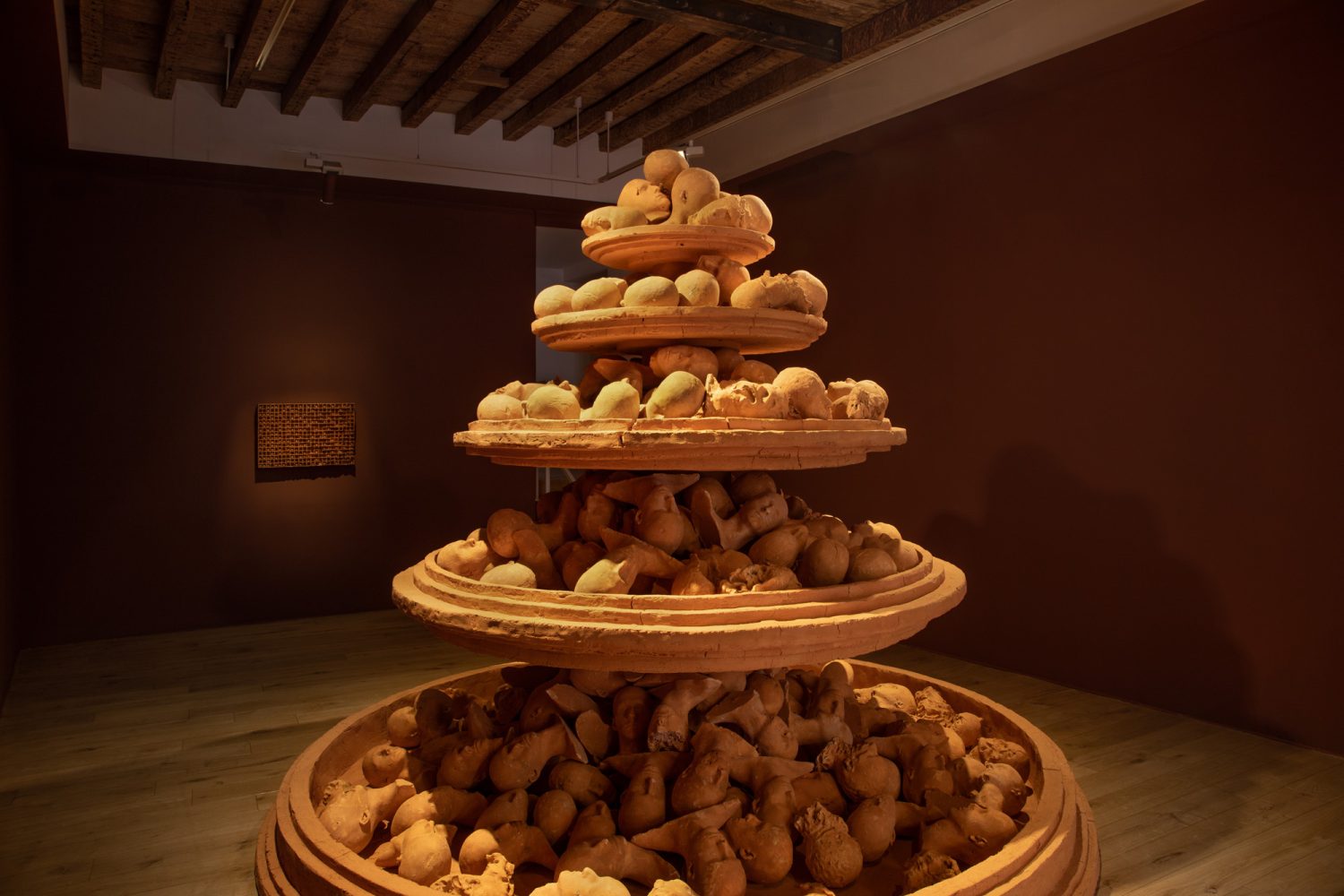
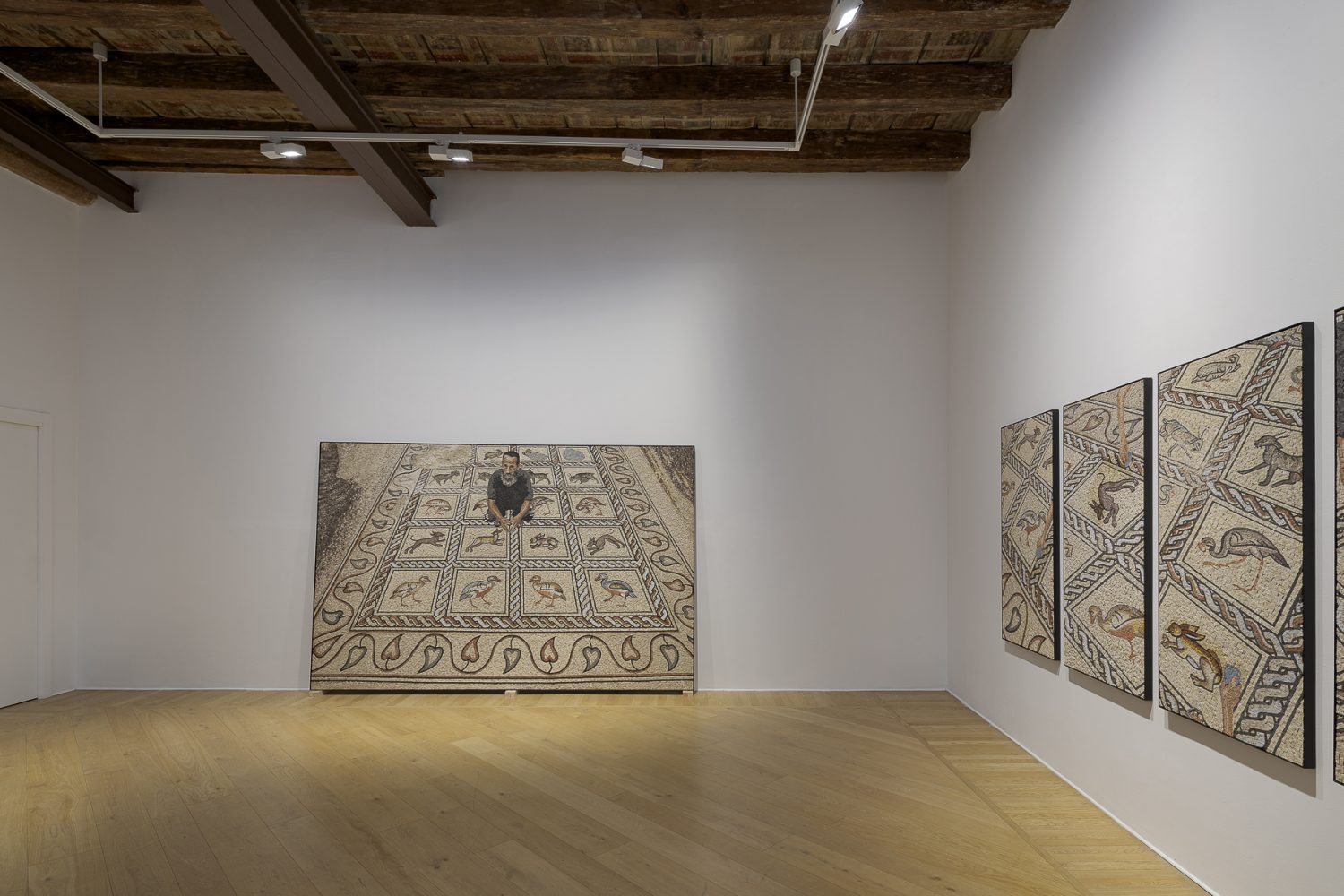
- Levi van Veluw

- Omar Mismar