The crossable space of Alfredo Pirri at miart
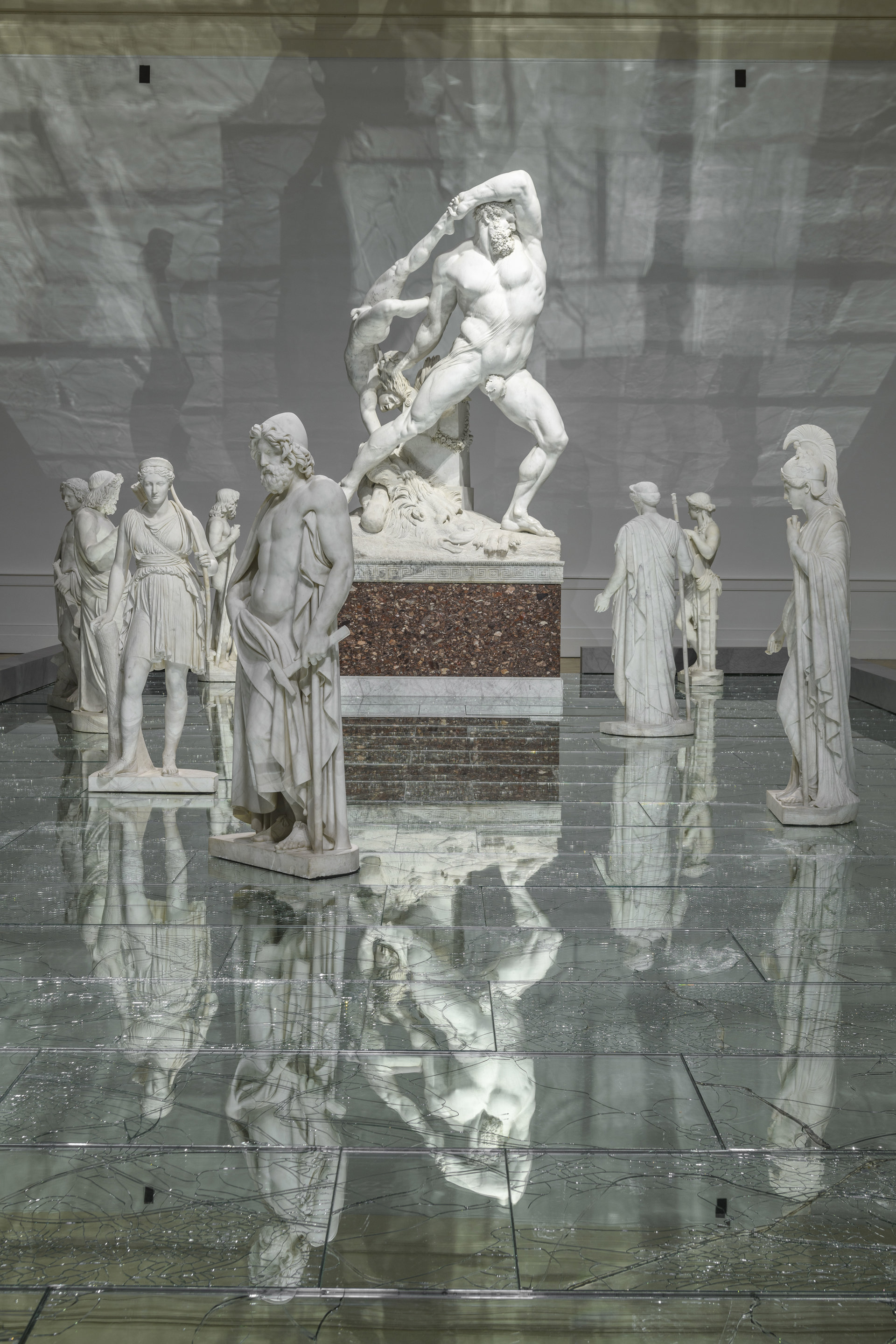
During the Milanese fair, Galleria Secci affirms its line with a radical intervention by the Cosenza artist between installation and expanded painting
Among the exhibitors at miart (April 17-19), Galleria Secci stands out, having worked since its inception on programming dedicated to contemporary art, supporting both emerging and established artists and managing important archives.
After about ten years of activity at Palazzo Ricasoli in Florence, in 2021 it opened two spaces in Milan, expanding its activity with ambitious exhibitions and international collaborations.
Its mission is to promote artists and foster cultural exchange, also through museum projects, publications, and the experimental space NOVO.
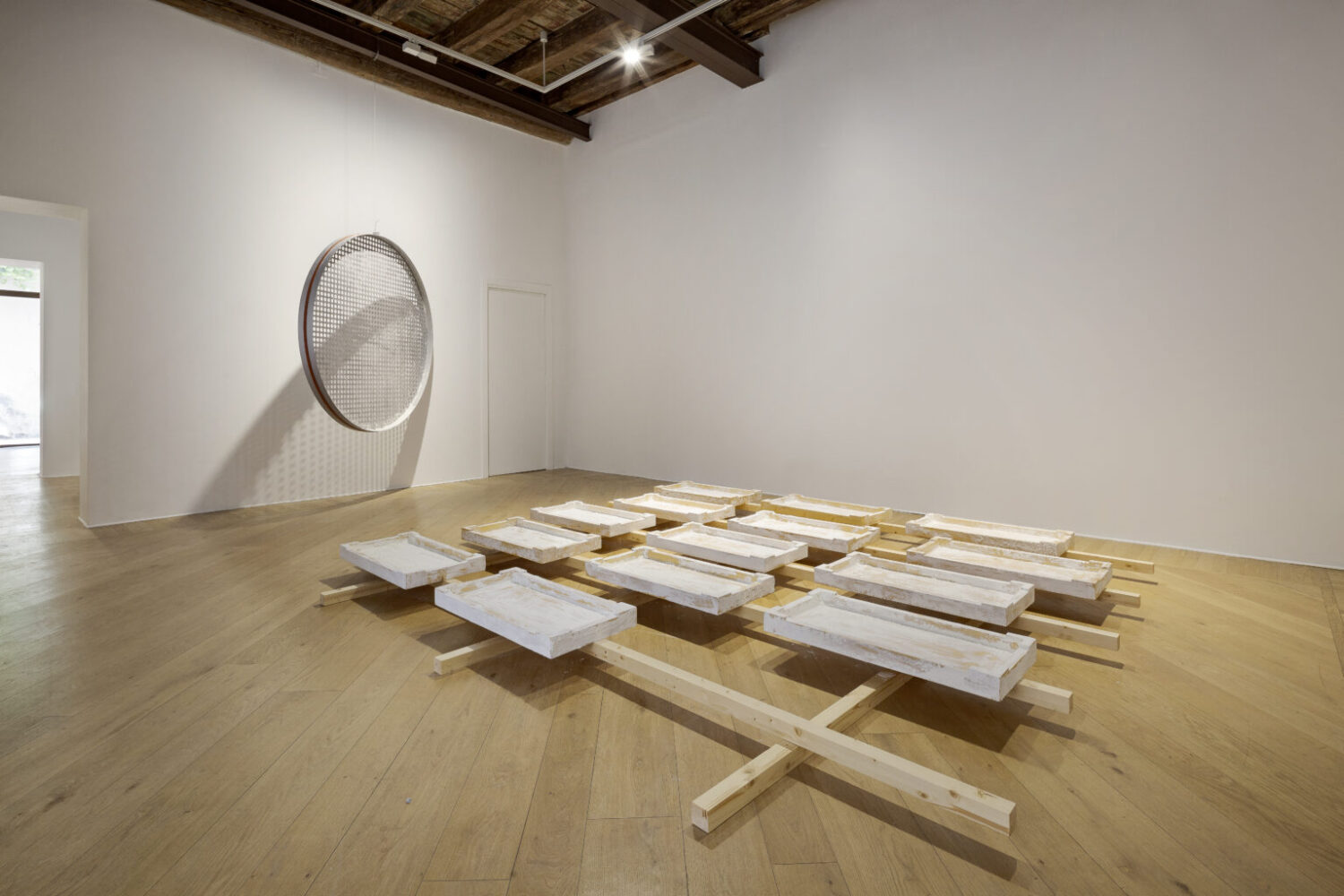
Alfredo Pirri, a Cosenza artist who since the mid-eighties has made himself known for his research at the border between painting and sculpture, architecture and installation, will be the protagonist of the booth that the gallery is setting up during the Milanese fair.
We asked Sara Cirillo, Senior Director of Galleria Secci and manager of the miart project on Alfredo Pirri, a few questions regarding the choice to present this specific artist on this occasion, the dialogue his works establish with the fair space, the coherence of this project with the gallery’s curatorial line, and more.
Your upcoming participation in miart with a booth entirely dedicated
to Alfredo Pirri represents a strong and identity-driven choice: what pushed you to focus on a monographic project in this context?
It is a choice that has as much to do with history as it does with the gallery’s current positioning.
Eduardo Secci has worked with Alfredo Pirri since the beginning, and dedicating a monographic booth to him today means reaffirming a precise line: building a real dialogue between generations, avoiding opportunistic or purely market-driven interpretations.
We are interested in affirming a vision in which historicized and younger artists coexist on the same level of research, without simplified hierarchies.
In this sense, the project on Pirri is also a way to clearly declare what kind of gallery we want to be.
Pirri’s work moves between painting, architecture, and installation: how did you think of translating this complexity within the fair space, which has very specific limits?
We avoided adapting the work to the fair space: we did the opposite, transforming the booth into an immersive device.
The floor intervention with walkable mirrors, linked to the Passi cycle, challenges perceptual stability and directly activates the visitor’s body.
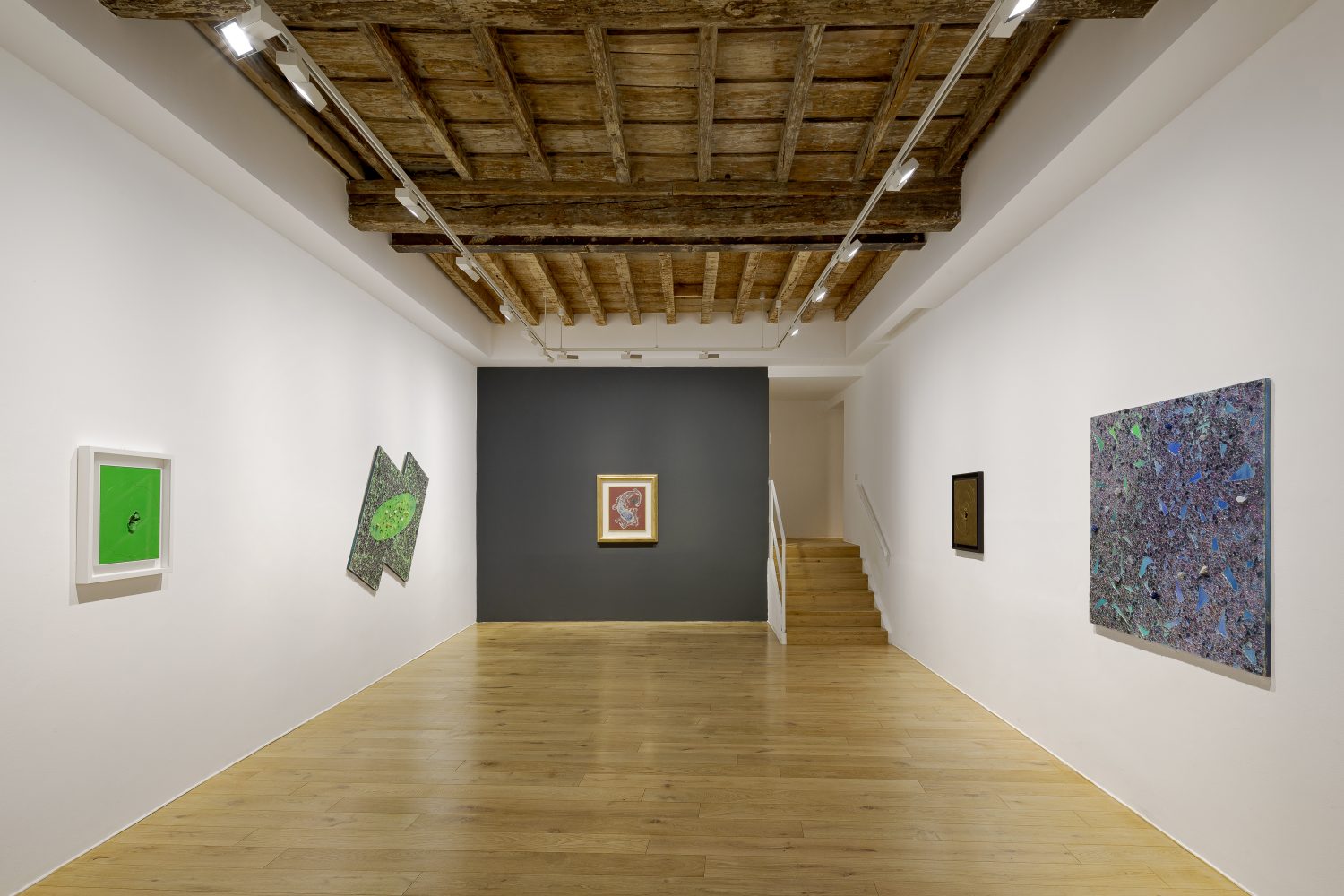
The wall works, even historical ones, do not simply accompany the installation, but extend its field, insisting on a painting that constantly tends to step outside of itself.
The point is precisely this: putting the commercial logic of the fair into tension with an experience that does not end with the object.
The booth is not designed to be “seen” quickly, but to be crossed, even at the cost of being uncomfortable.
In the path of Galleria Secci, which has always combined historicized and emerging artists, how does the figure of Pirri fit in today?
Pirri is not an episodic presence, but part of a structural and long-term relationship.
Over time we have hosted his solo exhibitions in both Florence and Milan: consider Acustica, curated by Laura Cherubini in 2021, just as we opened the Milanese gallery space which at the time was located in via Zenale.
His presence at miart does not respond to a contingent logic, but to an already consolidated path.
It is a work that we continue to develop with conviction, and which remains central for us.
Over the years, Galleria Secci has developed a strong international vocation: how does this openness influence your strategic choices at
the fair and your dialogue with collectors and institutions?
Internationality is not a recent strategy, but an original approach. From the very beginning, Eduardo Secci preferred not to work in a localized way, but to build relationships in a broader context, even when this seemed premature.
This continuity has allowed us to develop a stable presence in fairs and, above all, relationships that go beyond a single occasion.
We do not work for immediate results, but to build positioning over time.
The fact that several of our artists have entered international museum collections is a consequence of this approach, not an isolated goal.
In recent years you have expanded your presence with new locations and projects like NOVO: has this growth influenced the way you
approach fairs and the construction of booths?
NOVO is a project that I follow directly and that introduces a more explicit curatorial dimension within the gallery.
It was necessary to create a research space that would not be immediately absorbed by market dynamics.
The collaboration with Marco Scotini goes in this direction, as do the projects realized, which have a scale and ambition closer to institutional ones.
We also considered and evaluated the idea of presenting NOVO as an autonomous entity, but we realized that the strength of the project lies precisely in its integration with the gallery: while looking at an international model, Secci manages to organically hold together the more curatorial dimension of NOVO and the more structured one of the main programming.
What are the expectations for this participation at miart, both in terms of critical feedback and relationships with collectors and institutions? miart has always been a fair that has worked very well for us, both in terms of relationships with collectors and institutions, and for critical feedback.
It is one of the platforms we feel most akin to, precisely because of its ability to combine curatorial attention and commercial dimension in a balanced way.
Our expectations are therefore high, but also based on a consolidated experience: miart is a fair
that over the years has been able to build an aware and international audience, while at the same time maintaining a strong rooting in the Italian context.
We expect a careful and qualified discussion, not only in terms of sales but also in terms of dialogue, visibility, and the construction of long-term relationships, which for us remain a central element of the work at the fair.