Palazzo Fendi in Milan: Blending Art, History, Creativity

CEO Ramon Ros touted how the new flagship on Via Montenapoleone merges Roman heritage with Milanese modernism, showcasing art collaborations, bespoke craftsmanship. and a celebration of Fendi’s 100-year legacy.

MILAN – With the new Palazzo Fendi in Milan, CEO Ramon Ros wants “to bring magic.”
In his first interview since joining Fendi on July 1 from his role as president and chief executive officer of Louis Vuitton, mainland China, Ros underscored the many references in the flagship to the history of the brand, which is celebrating its centennial this year – from its foundation in Rome to the ties with the city of Milan.
Cue the imposing entrance on the ground floor on Via Montenapoleone, where ribbed Travertino marble and Roman lime walls create a unique draping reminiscent of ancient columns peppering the Italian capital. “The draping creates a strong emotional and authentic connection” with Rome and Fendi’s history, said Ros.
“Customers are looking for authenticity.”
The flooring was inspired by the geometric patterns of houses at the time with red, burgundy and creamy yellow tiles. Women’s accessories ranging from fashion jewelry, sunglasses and belts to fragrances and textile accessories are on display on the ground floor, where at the center stands a de-structured column by artist Anton Alvarez, part of the collaboration with Fondazione Officine Saffi and custom-made for Fendi. The sculpture is crafted from enameled ceramic in an array of tones that include vivid yellow, in a nod to Fendi’s signature color, as well as delicate purple and green tones.
Art is a key element throughout the store, “creating an eclectic dialogue with our products, strengthening the connection between the artists and the products. Creativity is the fil rouge,” said Ros, who expressed the goal to further elevate the brand. “We must increasingly dream of creativity and the [financial] numbers will follow.”
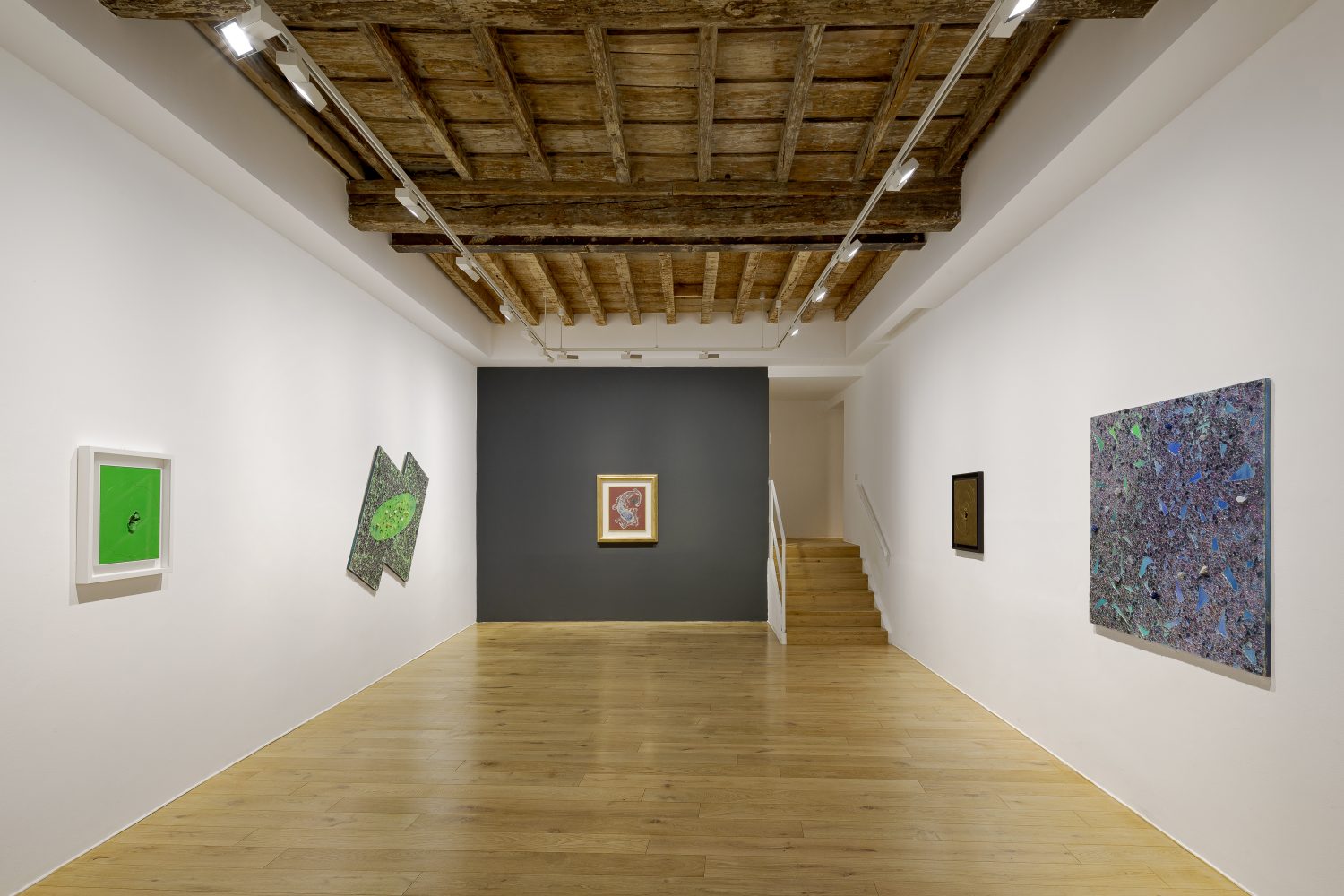
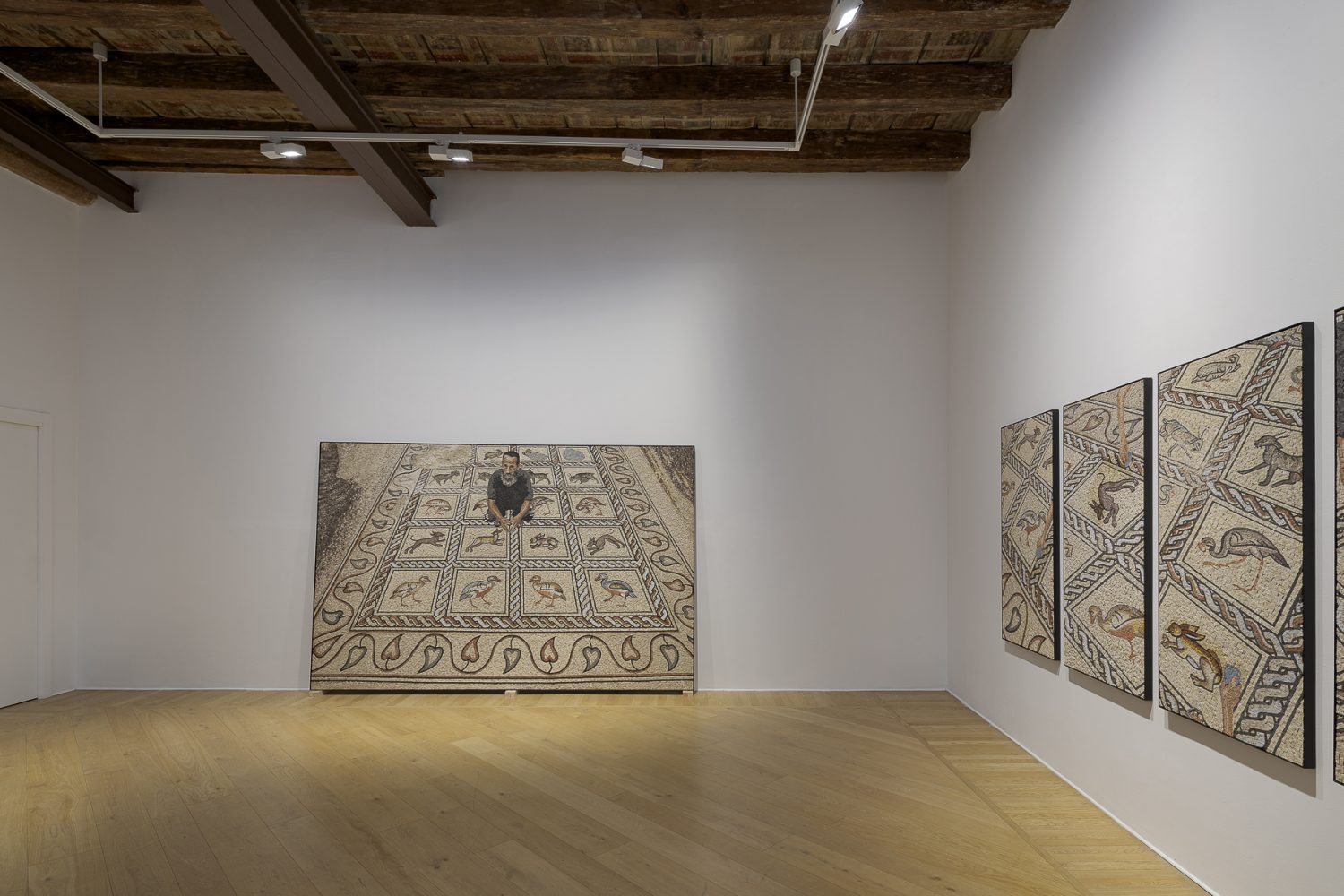
Artworks are on display in partnerships also with Fondazione Arnaldo Pomodoro, and the Mazzoleni and Secci galleries.

A standout at the entrance is a handcrafted sculpture by Roberto Sironi, a multifaceted abstract meteorite-like shape colored in electric blue, dark yellow and terracotta shades.
Two asymmetric knotted pieces by artist Roger Cal, part of the collaboration with Officine Saffi, are crafted from ceramic colored in Fendi yellow and in bubblegum pink.
There is no doubt the store is luxurious, aligned with Fendi’s positioning, but it is inviting with its warm color palette.
Strategically positioned at the crossroad between Via Montenapoleone and the key thoroughfare Corso Matteotti with a central tower dominating the architecture at the intersection of the two roads, Palazzo Fendi is located in a stately rationalist building designed by architect Emilio Lancia and erected between 1933 and 1936. “We found the right place at the right moment, again to convey our authenticity,” said Ros.
Milan is seeing a flurry of openings, from the expansion of the Saint Laurent store to Dries Van Noten and Alberta Ferretti boutiques, and Ros expressed a “very positive” take on the city’s performance at retail. It is “very relevant for tourists and locals alike,” he said. While acknowledging the current uncertain global scenario, the executive noted that “we think long-term, we have clients that are loyal for life.”
The boutique covers more than 9,820 square feet over four floors, including an in-house atelier. In addition, the top three floors will host three different dining concepts by Langosteria, due to open next month.
The imposing facade is marked by alternating arched and squared windows both at street level and on upper floors – the arches also are a reference to Fendi’s Palazzo della Civilta headquarters. Organic-shaped door handles inspired by the soft movement of leather appear on the entrance doors.
The new boutique concept was designed by Fendi’s architecture department and merges details echoing 1930s Milanese interiors, such as the building’s pre- existing marble patterns and the staircase connecting the floors that was designed by Lancia, with the addition of alternating delicate pink glass rhombus elements and a Cuoio Romano leather handrail with Selleria stitching. Similarly, the round windows present on the stairwell have been preserved and restored with metal sections creating a diamond pattern.
By the stairs, two symmetric art pieces by Levy Van Veluw recall the arches of the Fendi headquarters in Rome. In translucent polymer clay and pigments, the artworks are colored in emerald green and cobalt blue and are part of the collaboration with Secci Gallery.
A contemporary fresco by artist Edoardo Piermattei adds a sculptural dimension to the ceiling, painted in the nuances of pink, burgundy and terracotta, with touches of pink, burgundy and terracotta, with touches of neon blue.
Kevin Francis Gray was born in Northern Ireland in 1972. He currently lives and works between London and Pietrasanta.
Kevin Francis Gray has generated bodies of work which address the complex relationship between abstraction and figuration. At the core of the artist’s practice is an interrogation of the intersection of traditional sculptural techniques and contemporary life. Rather than working towards ideals of beauty or memorial, Gray attends to the psychological effects, often relying on textural surfaces rather than facial or bodily expressions. Furthering Gray’s decade of working with marble, his new work pushes the possibilities of the artist’s sculptural practice into new territories of physical and psychological expression.
He received his BA from the National College of Art & Design in Dublin (1995) and the School of Art Institute in Chicago (1996), and then went on to earn an MA in Fine Art from the Goldsmiths College in London. He works closely with the Giannoni marble studio in Pietrasanta, renowned for its use of sculpting techniques that date back to Canova and Michelangelo. His works have been included in exhibitions at the Royal Academy, London, UK; Sudeley Castle, Winchcombe, Gloucestershire, UK; Museum of Contemporary Art of the Val de-Marne, Paris, France; Nieuw Dakota, Amsterdam; Palazzo Arti Napoli, Naples, Italy; Musee d’art Moderne, Saint-Etienne, France; ARTIUM, Centro-Museo Vasco de Arte Contemporáneo, Vitoria-Gasteiz, Spain; Tel Aviv Museum of Art, Tel Aviv, Israel; and Art Space, New York, USA.
Kevin Francis Gray was born in Northern Ireland in 1972. He currently lives and works between London and Pietrasanta.
Kevin Francis Gray has generated bodies of work which address the complex relationship between abstraction and figuration. At the core of the artist’s practice is an interrogation of the intersection of traditional sculptural techniques and contemporary life. Rather than working towards ideals of beauty or memorial, Gray attends to the psychological effects, often relying on textural surfaces rather than facial or bodily expressions. Furthering Gray’s decade of working with marble, his new work pushes the possibilities of the artist’s sculptural practice into new territories of physical and psychological expression.
He received his BA from the National College of Art & Design in Dublin (1995) and the School of Art Institute in Chicago (1996), and then went on to earn an MA in Fine Art from the Goldsmiths College in London. He works closely with the Giannoni marble studio in Pietrasanta, renowned for its use of sculpting techniques that date back to Canova and Michelangelo. His works have been included in exhibitions at the Royal Academy, London, UK; Sudeley Castle, Winchcombe, Gloucestershire, UK; Museum of Contemporary Art of the Val de-Marne, Paris, France; Nieuw Dakota, Amsterdam; Palazzo Arti Napoli, Naples, Italy; Musee d’art Moderne, Saint-Etienne, France; ARTIUM, Centro-Museo Vasco de Arte Contemporáneo, Vitoria-Gasteiz, Spain; Tel Aviv Museum of Art, Tel Aviv, Israel; and Art Space, New York, USA.

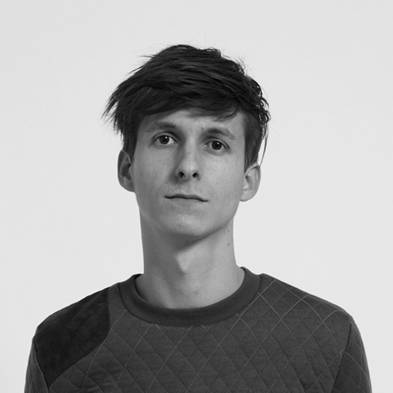
Levi van Veluw was born in the Dutch town of Hoevelaken in 1985 and studied at the ArtEZ Institute of the Arts in Arnhem. He lives and works in Amsterdam. Since graduating in 2007, he has produced multi- disciplinary works that spans scenographic installations, photographs, videos, sculptures and drawings. Van Veluw bases his practice around the idea of an alternate reality, creating a visual laboratory where both order and chaos are present. The artist has extensively investigated the relativity of matter and draws on scientific theories and physics to approach various existential dilemmas. His dark and sensory installations encourage the viewer to reflect on the development of a new knowledge, stemming from the desire for a regulated universe, while acknowledging the rational impossibility of total control.
Among his personal recent exhibitions we remind: Videocittà Rome, Italy (2021); Eduardo Secci, Florence, Italy (2020); Rijksmuseum Twenthe, Enschede,The Netherlands (2020); Praz-Delavallade, Paris (2020); Het HEM, Zaandam, The Netherlands (2020); Tenuta Dello Scompiglio, Lucca, Italy (2019); Domaine de Kerguéhennec, Bignan, France (2018); La Galerie Particulière, Paris (2017); Galerie Ron Mandos, Amsterdam (2019); Rosenfeld Porcini Gallery, London (2016). Among group shows we remind: Museo Kranenburgh, Bergen, The Netherlands (2017); labellisée Normandie Impressonniste, Jumièges, France (2016); Museum de Fundatie, Zwolle, the Netherlands (2016); Maddox Arts, London (2015). Van Veluw’s works have also been widely shown at international art fairs such as Zona Maco (2018); The Armory Show, New York (2017); Art Brussels (2016); Chicago Art Fair (2016); Volta Basel (2012) and the Barcelona Loop Fair Barcelona (2014). The work of Levi Veluw has been exhibited internationally in leading museums and institutions, and is included in both public and private collections, including the Borusan Contemporary Collection, Caldic Collection, Ekard Collection and KPMG Art Collection.
Levi van Veluw was born in the Dutch town of Hoevelaken in 1985 and studied at the ArtEZ Institute of the Arts in Arnhem. He lives and works in Amsterdam. Since graduating in 2007, he has produced multi- disciplinary works that spans scenographic installations, photographs, videos, sculptures and drawings. Van Veluw bases his practice around the idea of an alternate reality, creating a visual laboratory where both order and chaos are present. The artist has extensively investigated the relativity of matter and draws on scientific theories and physics to approach various existential dilemmas. His dark and sensory installations encourage the viewer to reflect on the development of a new knowledge, stemming from the desire for a regulated universe, while acknowledging the rational impossibility of total control.
Among his personal recent exhibitions we remind: Videocittà Rome, Italy (2021); Eduardo Secci, Florence, Italy (2020); Rijksmuseum Twenthe, Enschede,The Netherlands (2020); Praz-Delavallade, Paris (2020); Het HEM, Zaandam, The Netherlands (2020); Tenuta Dello Scompiglio, Lucca, Italy (2019); Domaine de Kerguéhennec, Bignan, France (2018); La Galerie Particulière, Paris (2017); Galerie Ron Mandos, Amsterdam (2019); Rosenfeld Porcini Gallery, London (2016). Among group shows we remind: Museo Kranenburgh, Bergen, The Netherlands (2017); labellisée Normandie Impressonniste, Jumièges, France (2016); Museum de Fundatie, Zwolle, the Netherlands (2016); Maddox Arts, London (2015). Van Veluw’s works have also been widely shown at international art fairs such as Zona Maco (2018); The Armory Show, New York (2017); Art Brussels (2016); Chicago Art Fair (2016); Volta Basel (2012) and the Barcelona Loop Fair Barcelona (2014). The work of Levi Veluw has been exhibited internationally in leading museums and institutions, and is included in both public and private collections, including the Borusan Contemporary Collection, Caldic Collection, Ekard Collection and KPMG Art Collection.