The “Aesthetics of Disaster” in Omar Mismar’s Mosaics

Fresh from the success of his mosaics at the 60th Venice Biennale of Art, the Lebanese artist now presents new works in Milan at Galleria Secci, created using the same technique and other media.
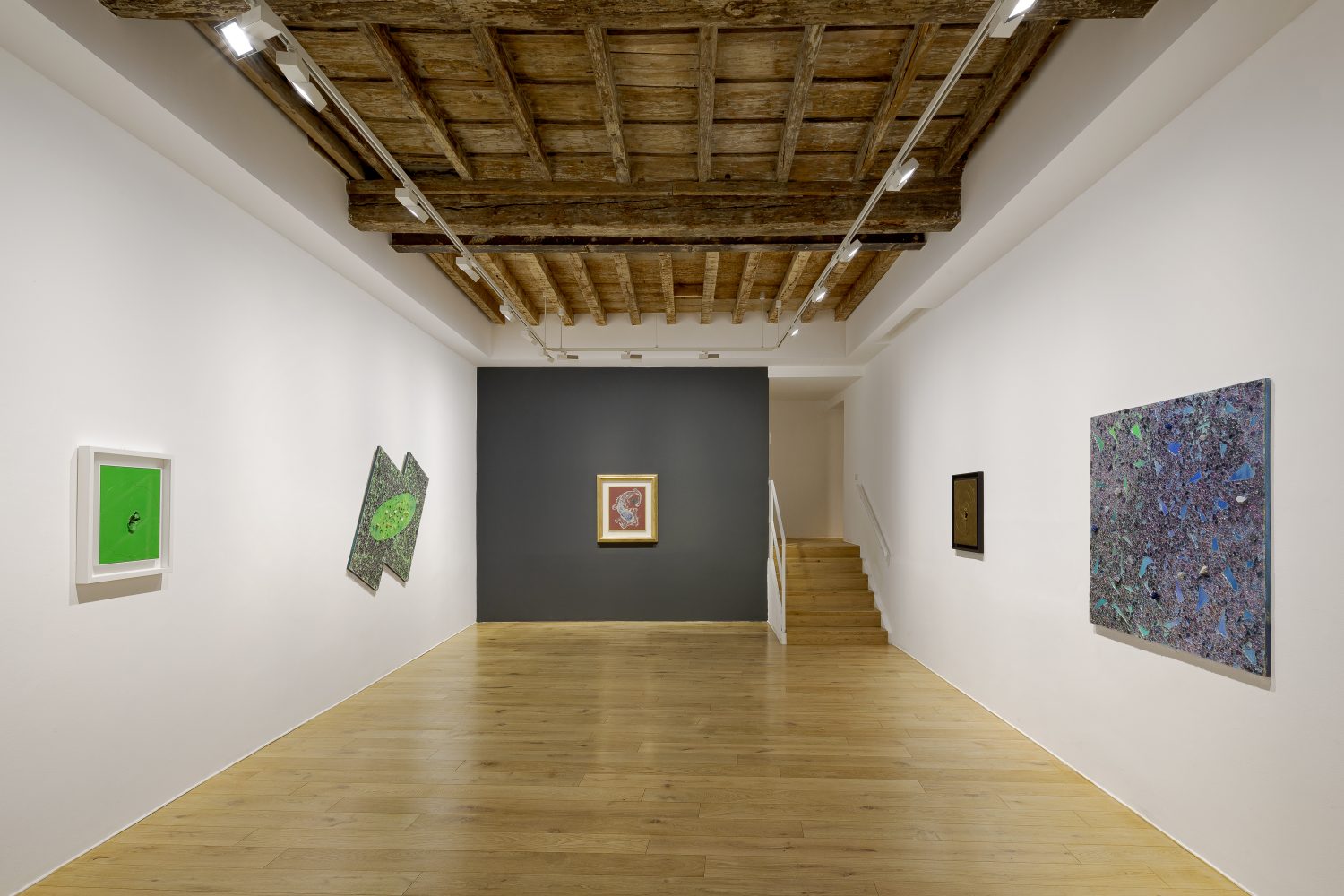
At a time when the ruins of war tragically occupy our visual and mental space, artists and curators are paying increasing attention to this theme. Thus, while the three-year project titled Ruins has just begun at the Monumental Complex of Santa Croce in Bosco Marengo (Alessandria), Exercises in Ruins is the title of the solo exhibition (his first in Italy) by Lebanese artist Omar Mismar (b. 1986), the second installment of the biennial exhibition project Novo, curated by Marco Scotini and presented from September 19 to December 20 at Secci Milano, Via Olmetto 1.
Following the acclaim garnered by his mosaics at the 60th Venice Biennale, the artist now brings to Milan new works made with the same technique and through other media, unified by what Scotini describes as “the political nature of the relationship between desire and absence, where desire must be read as the impossibility of presence.” Having been formed within the debates surrounding the so-called Arab Spring and its representation, Mismar has developed what he himself calls an “aesthetics of disaster”, with which—Scotini notes—“he questions the truthfulness of the documentary image, proposing an alternative to the hyperrealism of new visual devices. The ruins of disaster in Mismar are not so much those of a visible explosion as the result of an absence, a failure, a less perceptible rupture.”
His interest in mosaics, which began in 2015 through his dialogue with Abou Farid, one of the Syrian “Monuments Men” who sought to save those precious artifacts from destruction under the Bashar al-Assad regime, continues to generate new mosaic works. In his practice, however, these are intertwined with the pixelated suggestion of digital images that now permeate both his and our daily lives.
The infinite tragedy of Gaza is the focus of the three monumental mosaic panels displayed in the gallery’s first room. They recount the deeply symbolic story of Salman al-Nabahin and his son Ahmad, who, while stubbornly tending olive trees in the Bureij refugee camp in the Gaza Strip, uncovered a Byzantine mosaic beneath the soil.
In the following rooms, with the series “Torsos” (2025), viewers encounter images of intertwined male bodies taken from dating apps, rendered through mosaic tesserae into fake archaeological relics. Meanwhile, the red neon piece “The Path of Love” (2013)—which traces the artist’s route through San Francisco to a late-night meeting arranged via Grindr—speaks of desire for the other, often thwarted by the app’s glitches and interruptions. “The disaster,” comments Scotini, “is the impossibility of connection, the breakdown of communication—but also the irreducible desire for it to occur.”